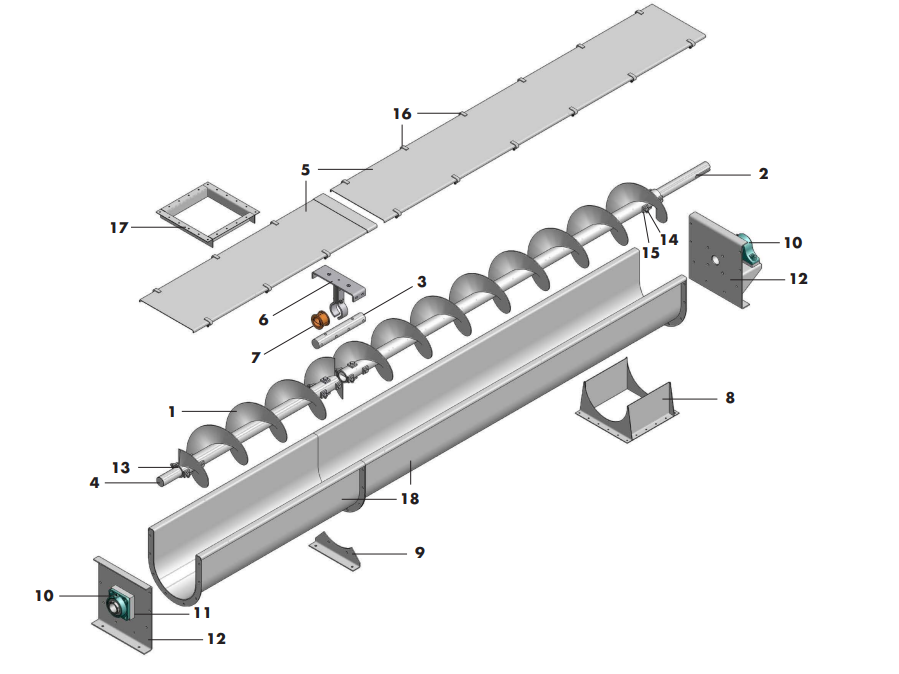
1.Site Assessment if possible or collect the end user's data in detail: Conduct a thorough site assessment to understand the layout, space constraints, and environmental factors that may impact the screw conveyor's installation and operation.
2.Material Properties: Identify the characteristics of the material to be conveyed, such as particle size, density, moisture content, and abrasiveness. This information will influence the screw conveyor's design, including the type of screw, flighting, and trough materials.
3.Capacity and Throughput: Determine the required capacity and throughput rate of the screw conveyor to meet the specific material handling needs at the site.
4.Incline or Decline: Assess whether the conveyor needs to be inclined, declined, or horizontal based on the material flow requirements and site layout.
5.Length and Configuration: Determine the required length and configuration of the screw conveyor based on the distance between the material's source and destination points.
6.Space Constraints: Consider any space limitations or obstacles that may affect the installation and operation of the screw conveyor.
7.Environmental Factors: Account for environmental conditions such as temperature, humidity, and potential exposure to corrosive substances, which may affect the choice of materials for the screw conveyor's construction.
8.Safety Standards: Ensure compliance with safety standards and regulations to protect personnel and equipment during operation.
9.Power Source: Evaluate the power source available on-site to determine the appropriate motor size and power requirements for the screw conveyor.
10.Integration with Existing Systems: If there are existing material handling systems or processes on-site, plan for seamless integration of the custom screw conveyor with these systems.
11.Maintenance and Accessibility: Design the screw conveyor with maintenance in mind, providing easy access to critical components and ensuring routine upkeep can be performed efficiently.
12.Consultation with Experts: Seek guidance from experienced engineers and manufacturers specializing in screw conveyor design and customization to ensure the system is optimized for the site's unique requirements.
By carefully considering these factors and working with knowledgeable professionals, a custom screw conveyor can be designed to precisely meet the material handling needs and site conditions, contributing to a more efficient and productive operation.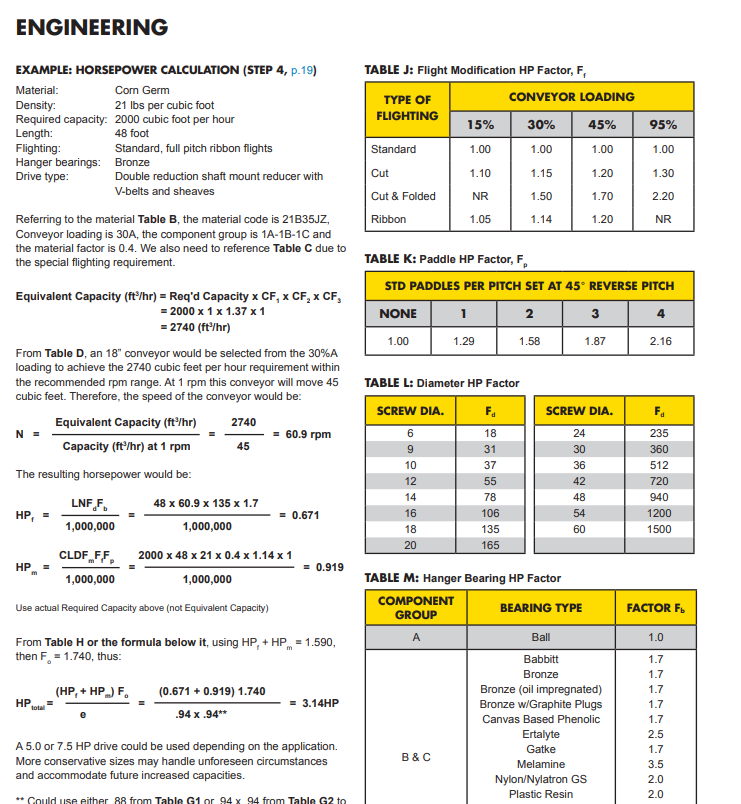
• 14" x 1/4" U-Trough.
• Standard Inlet and Discharge.
• 14 Gauge Covers or Protective Grating
.• 20HP at 65RPM Class I - Division I Explosion Proof Motor
460V/60Hz & 380V/50Hz, Dual voltage 3 phrase•
.• Integrated Fixed Drive Gearbox
.• Maximum Incline of 25 degrees.
• Includes Full Integration to VFD Control Panel