Product Overview
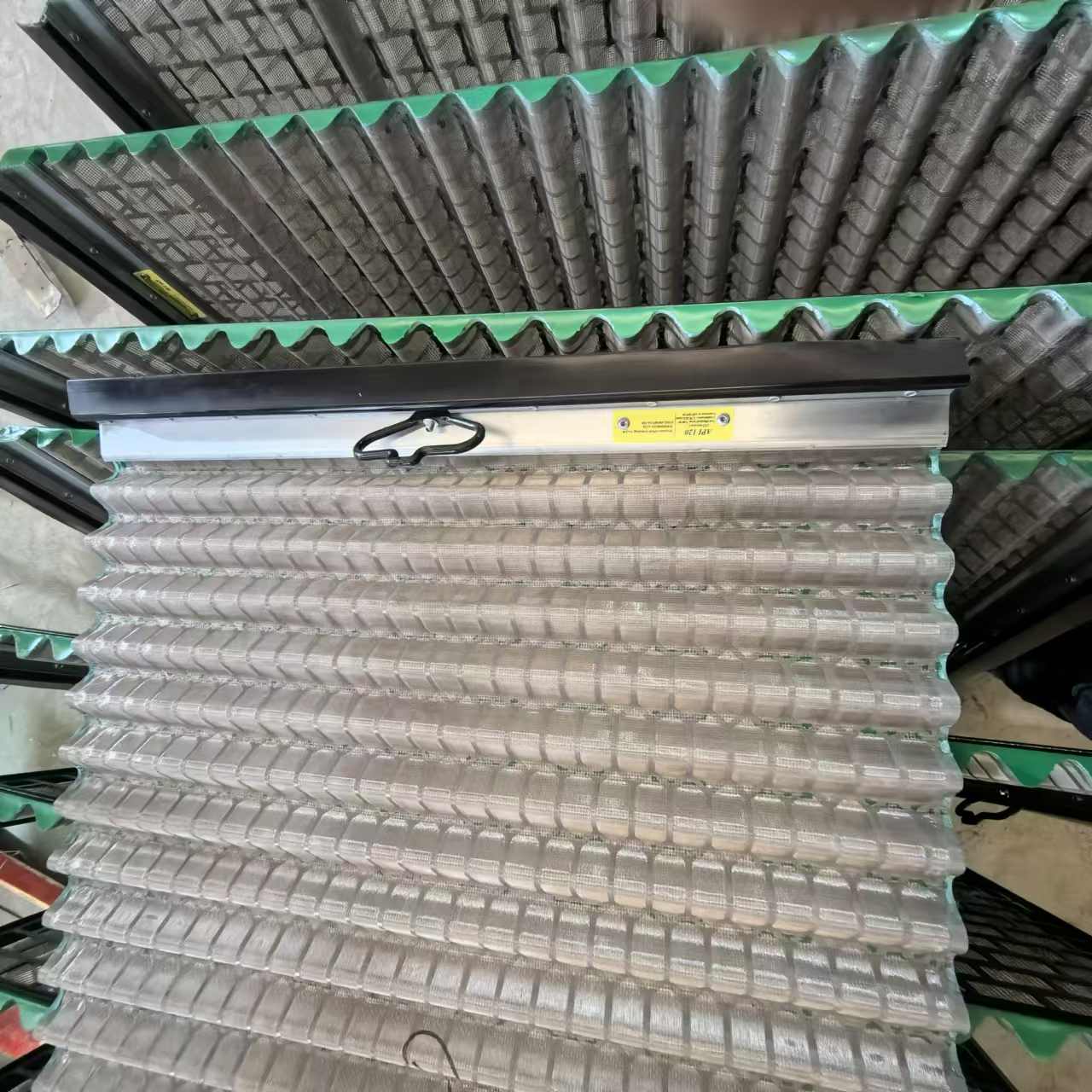
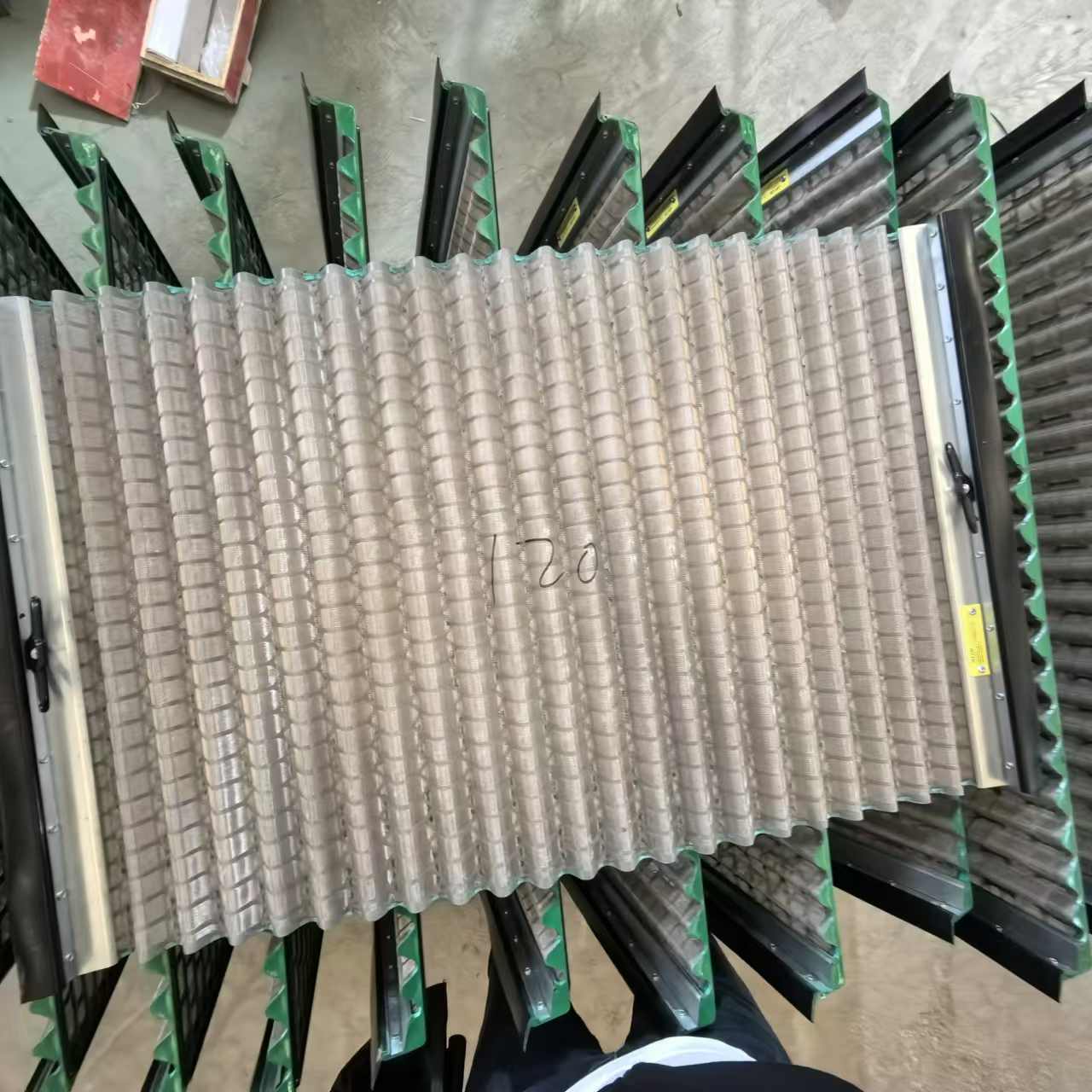
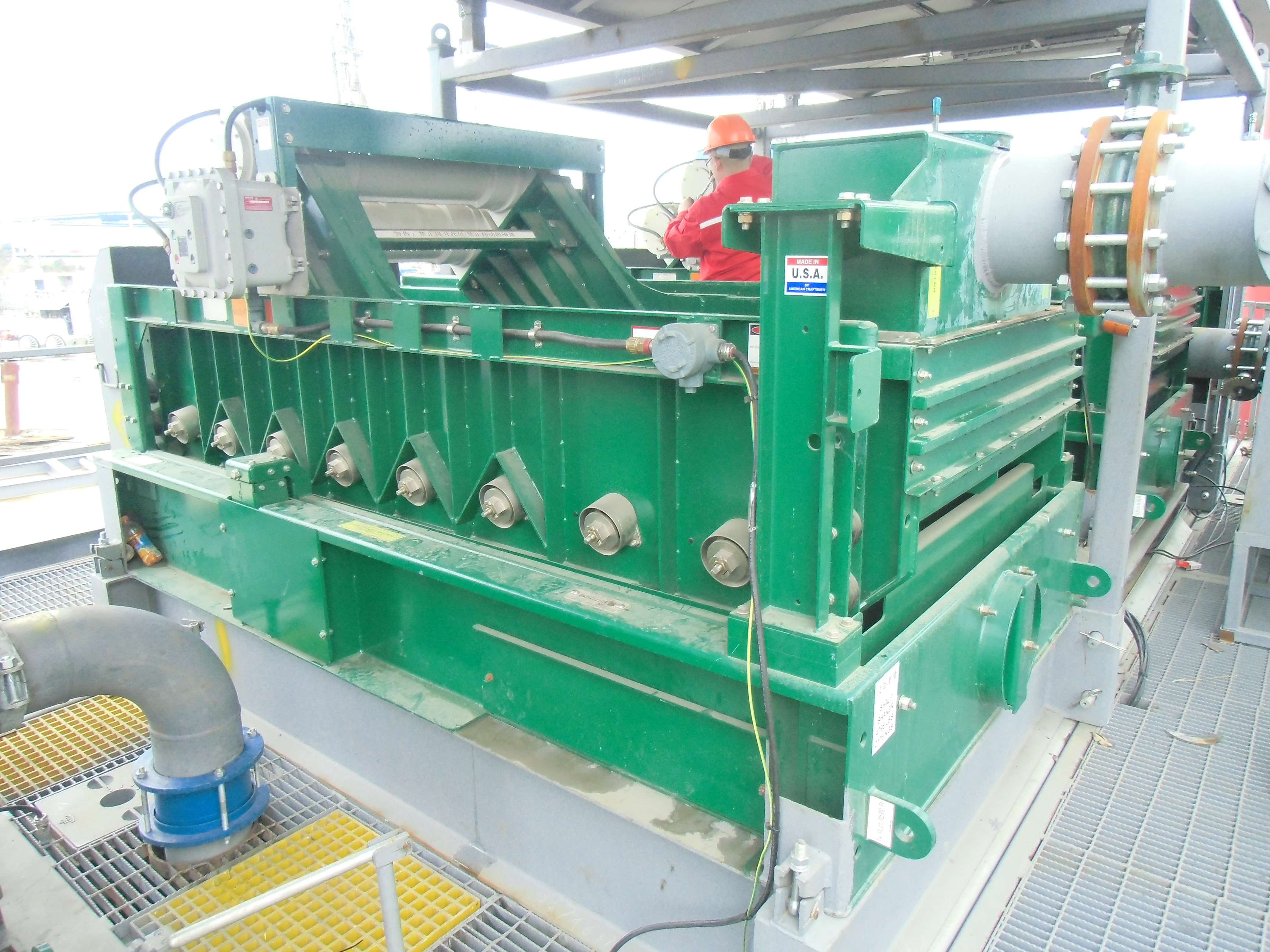
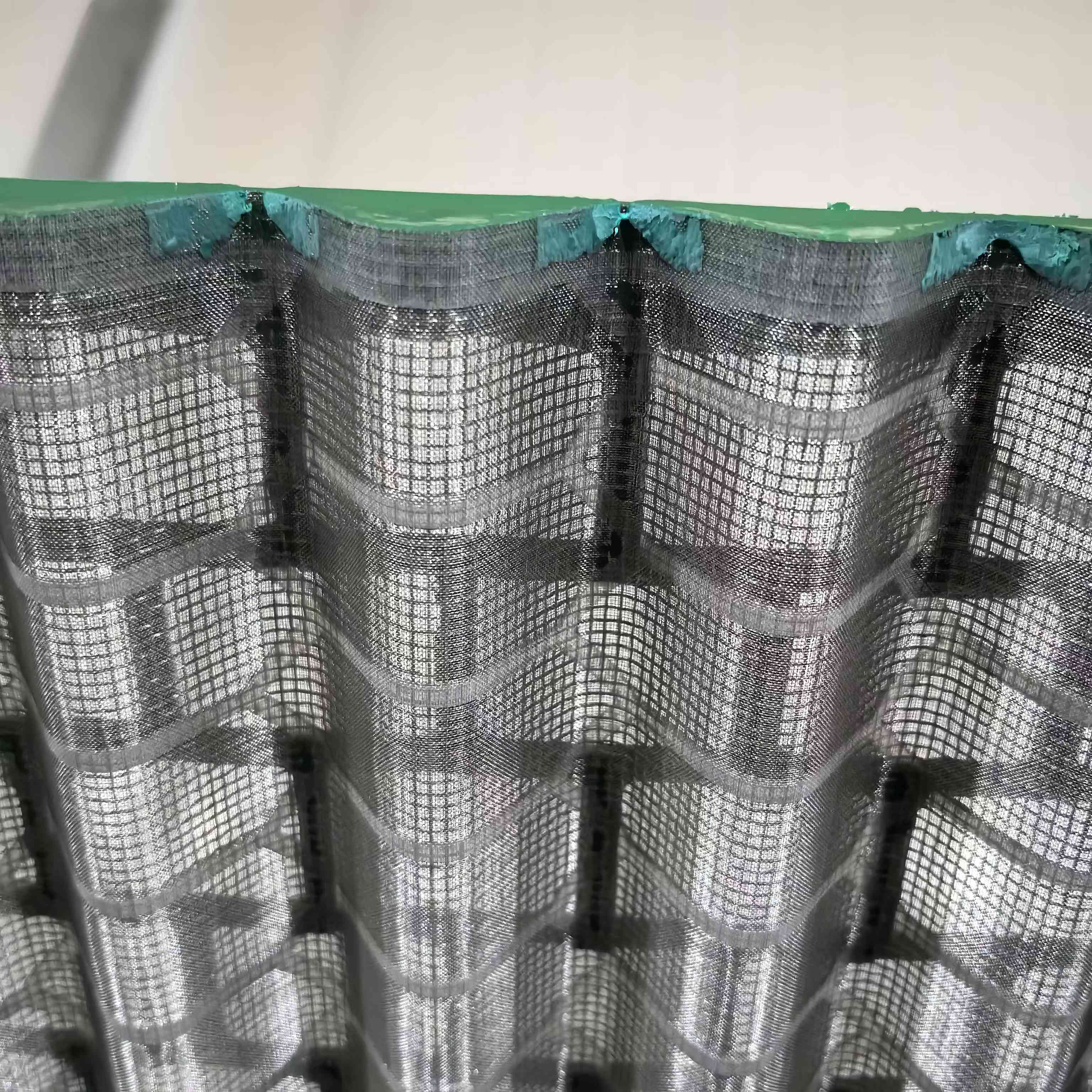
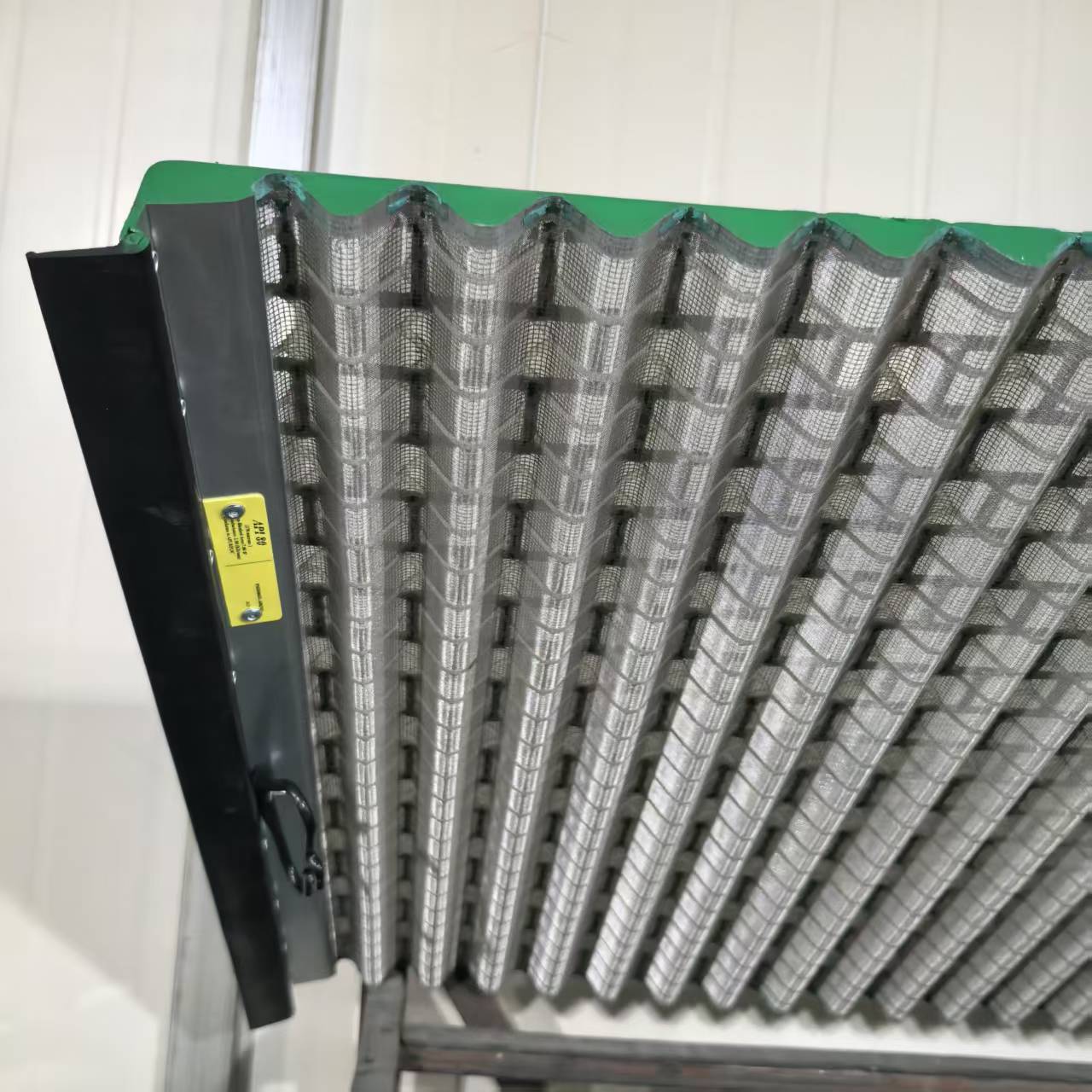
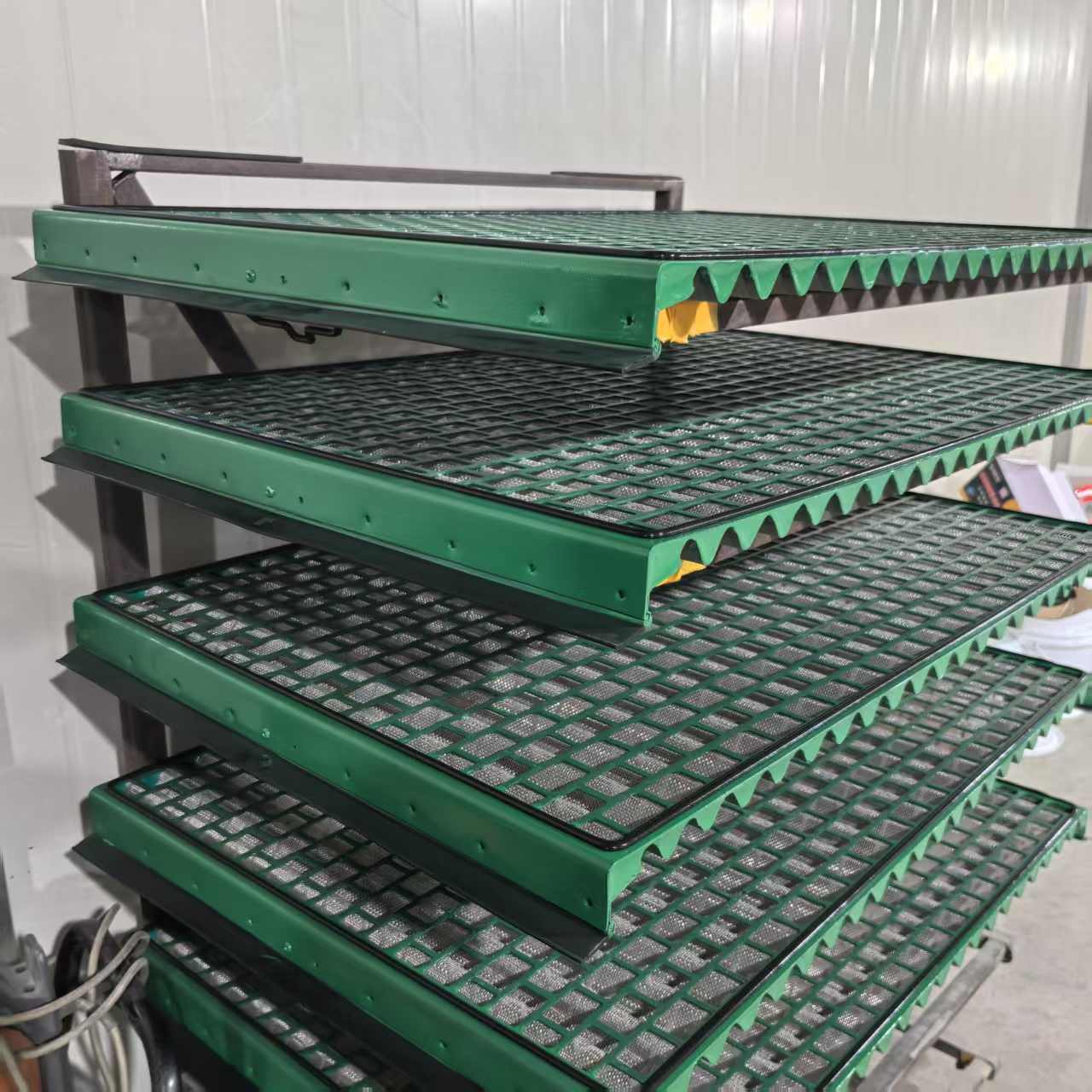
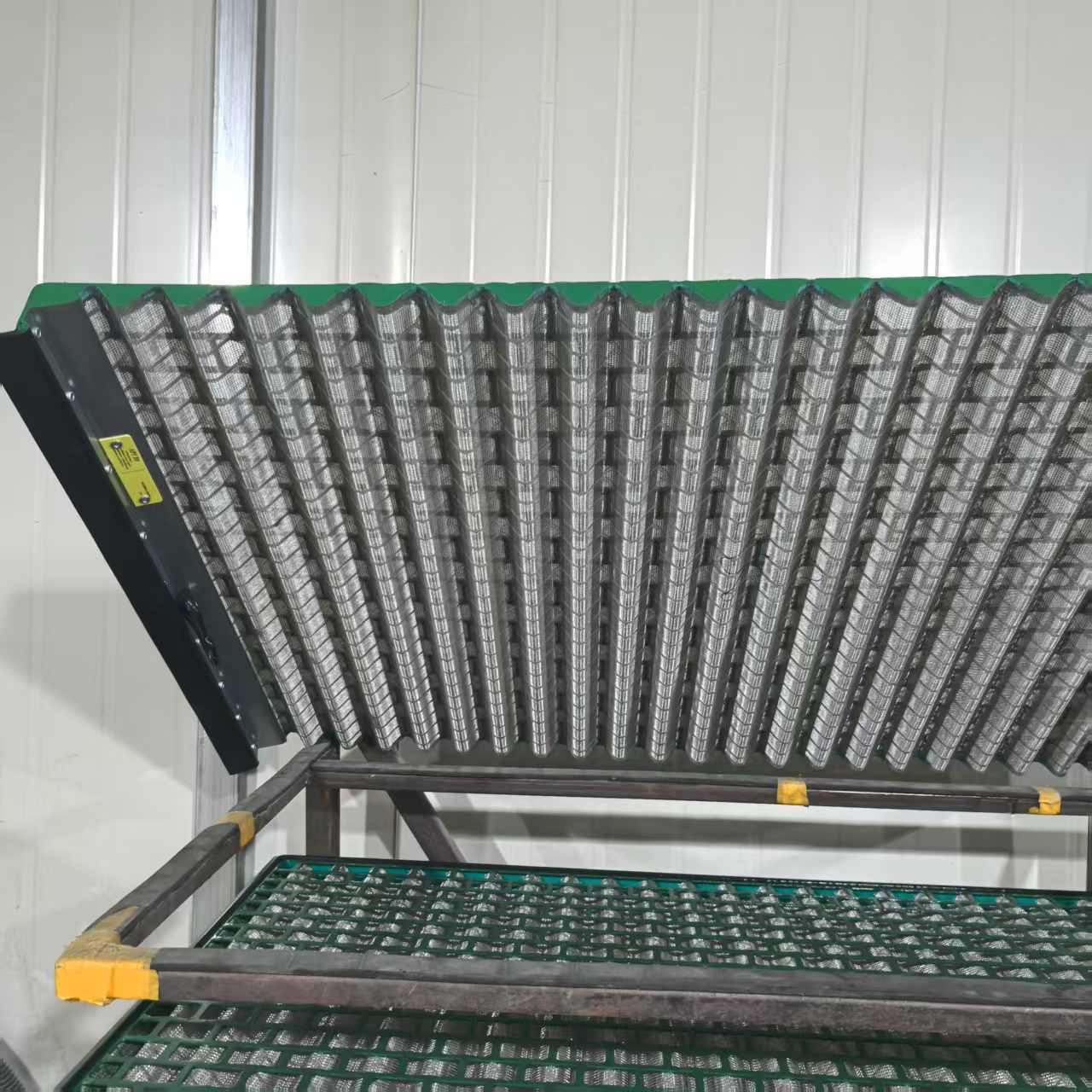
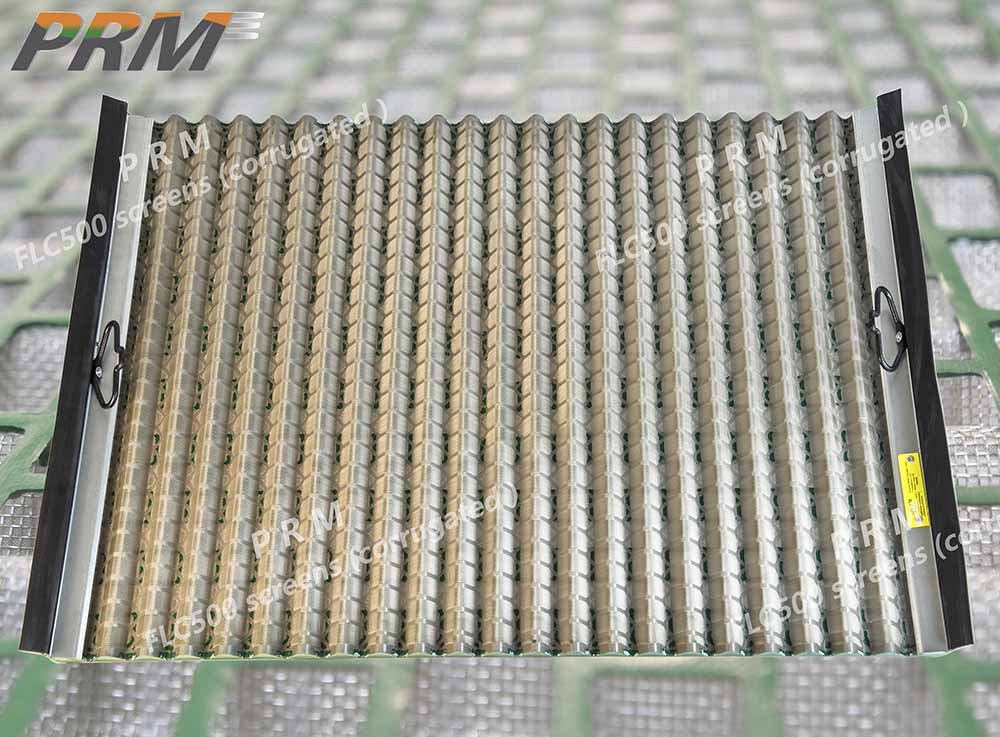
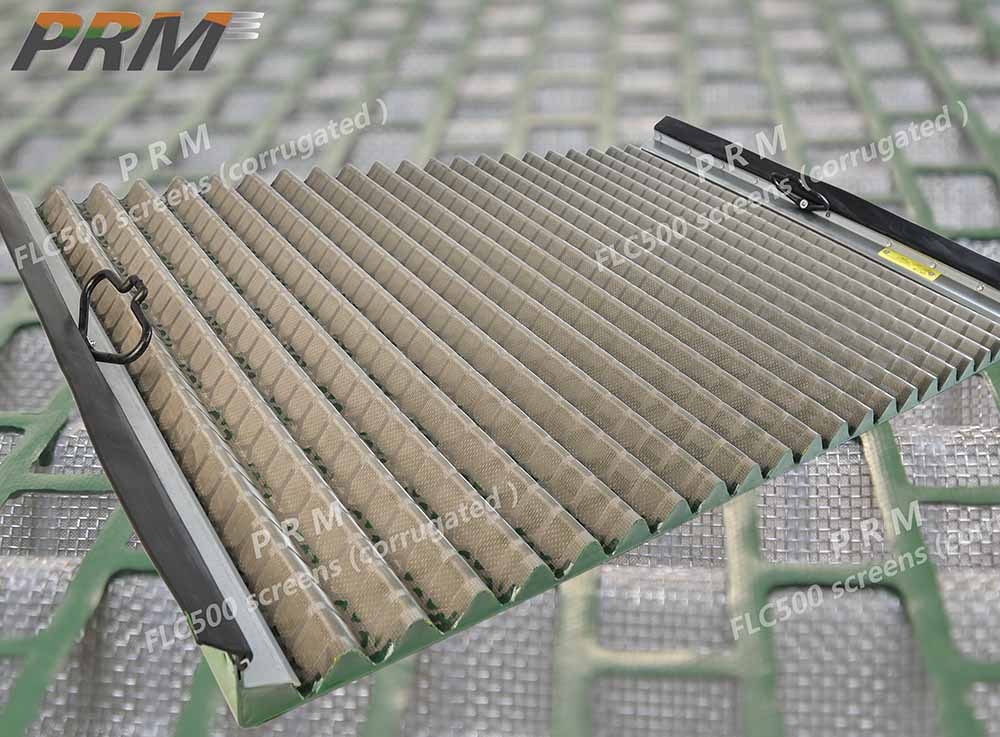
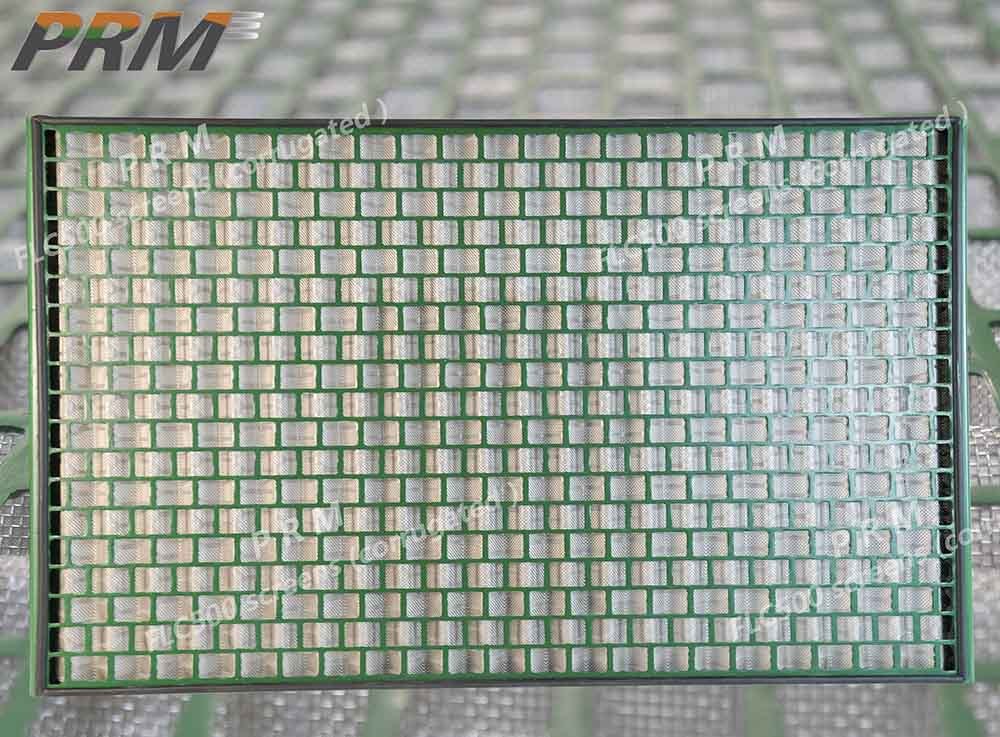
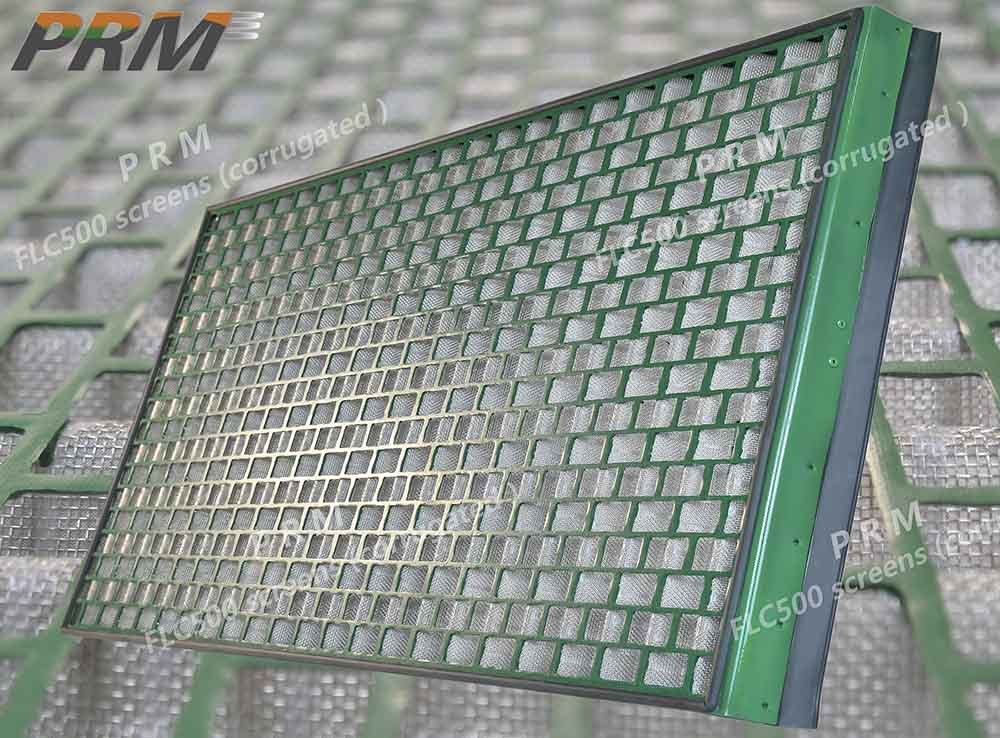
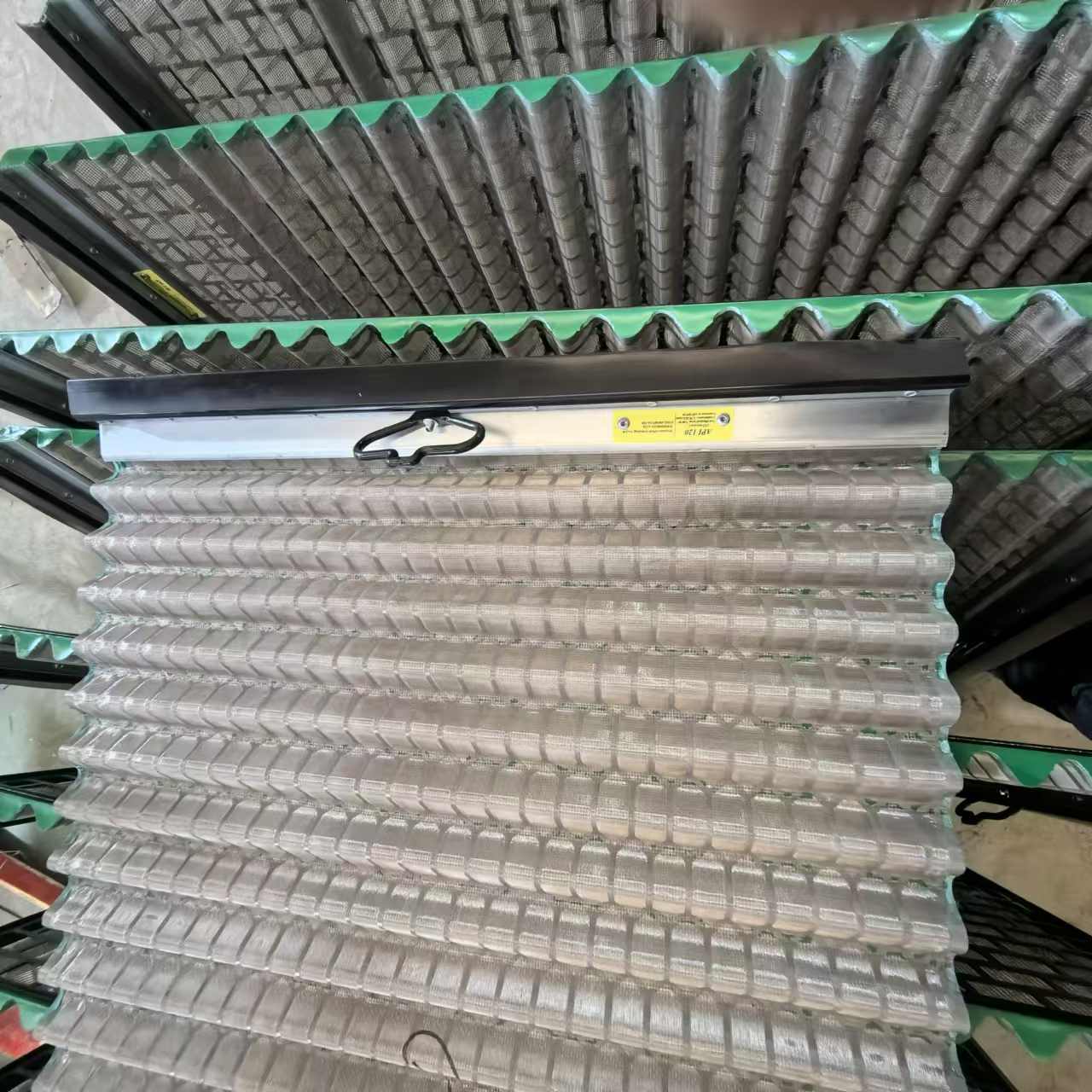
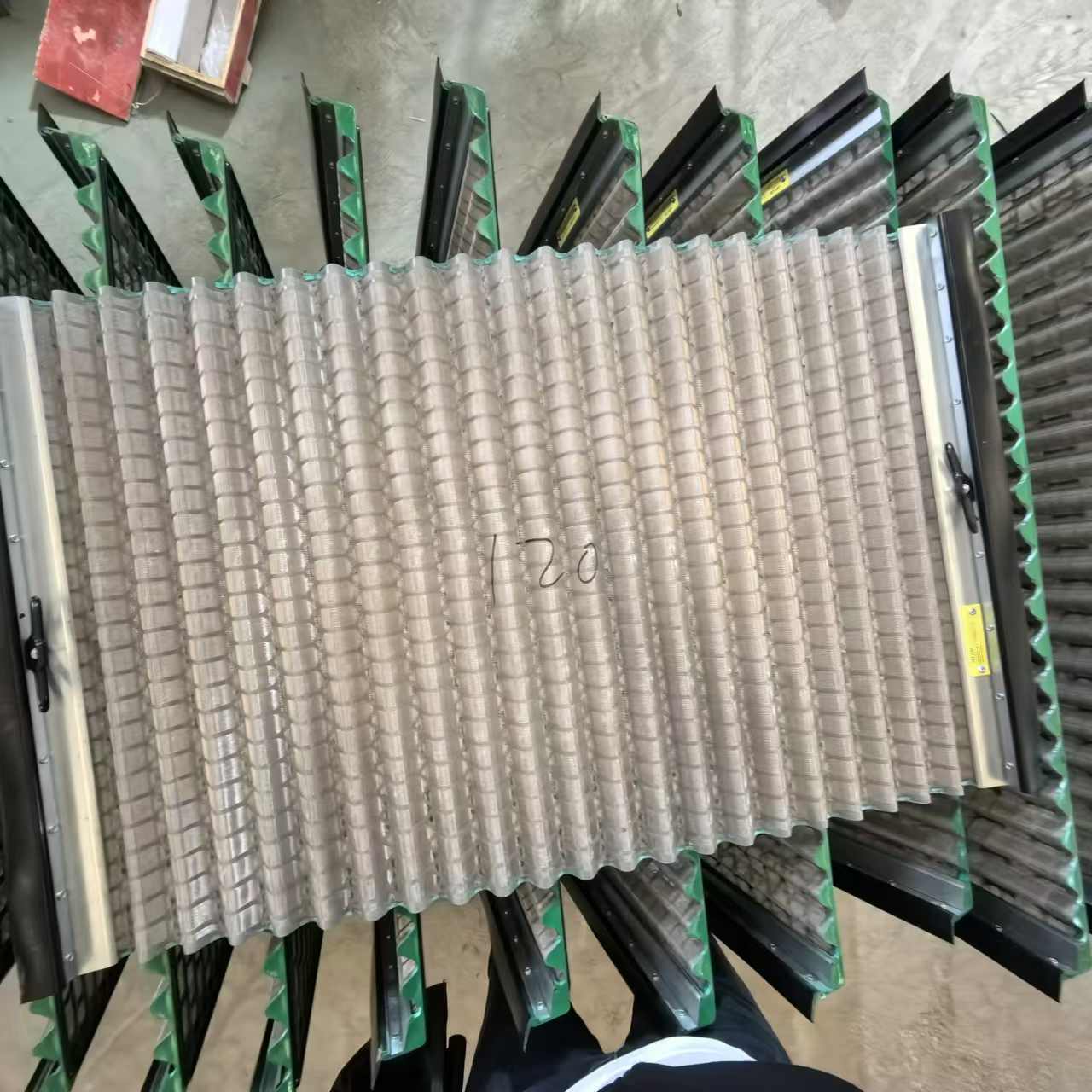
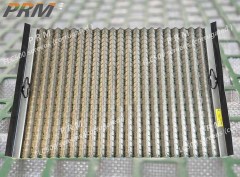
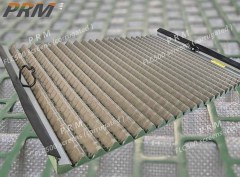
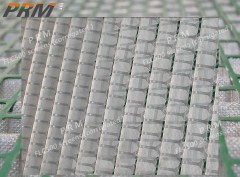
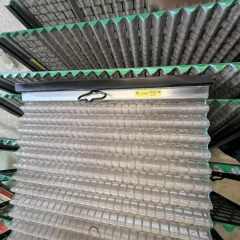
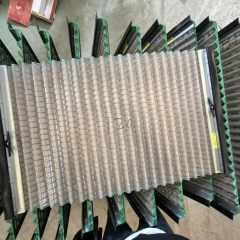
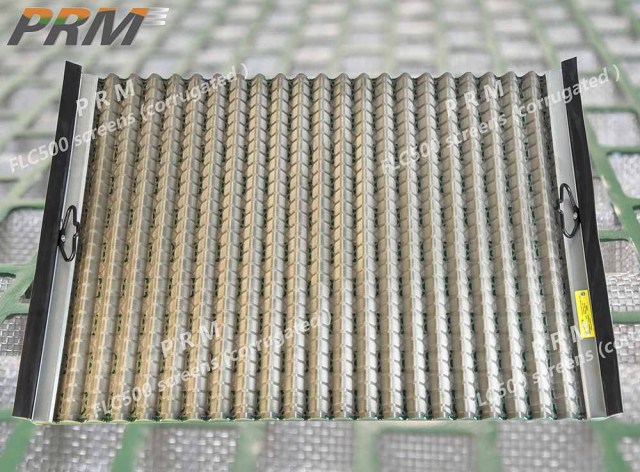
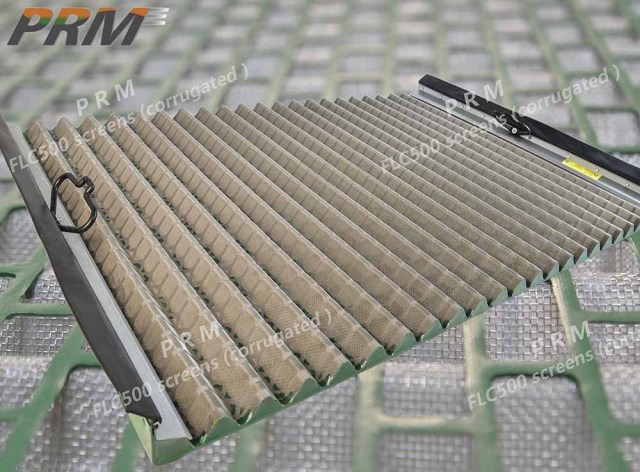
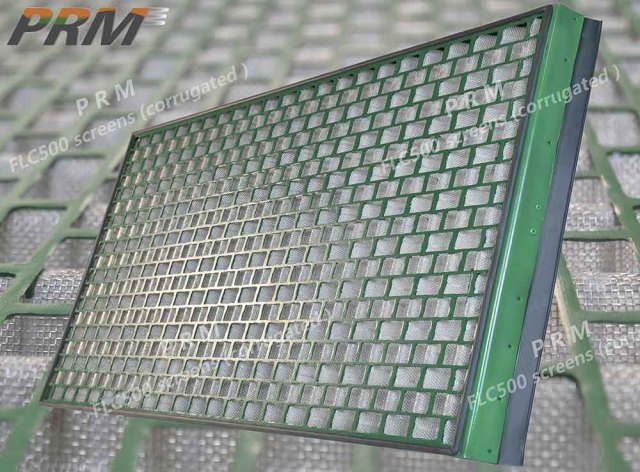
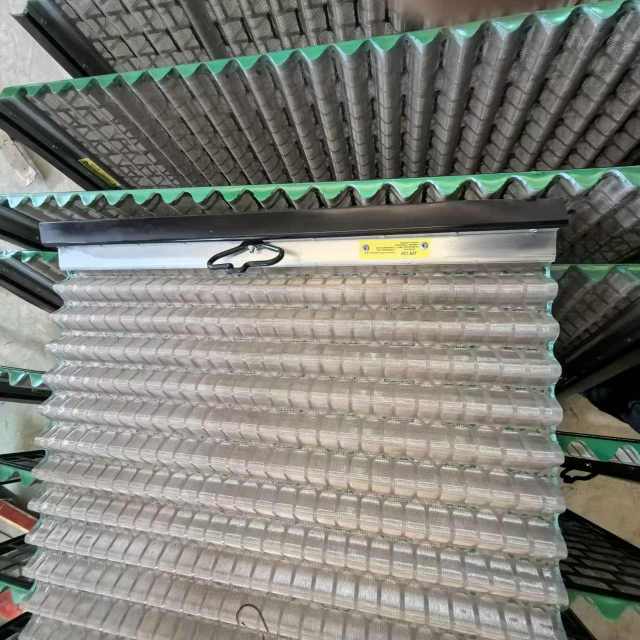
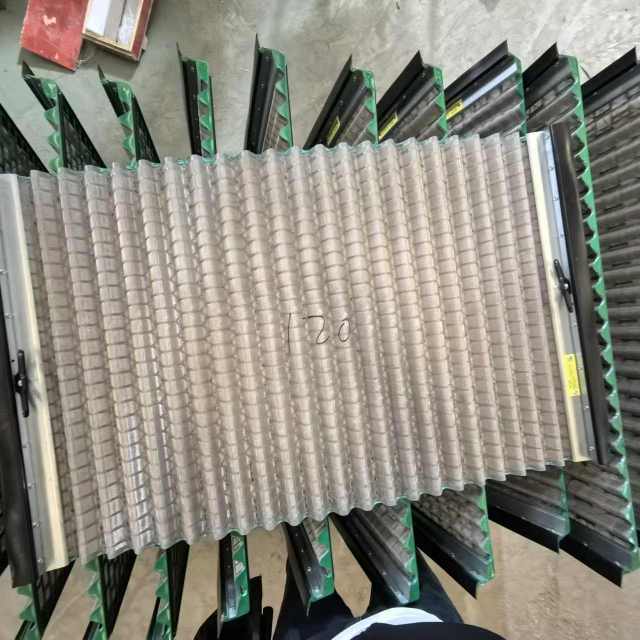
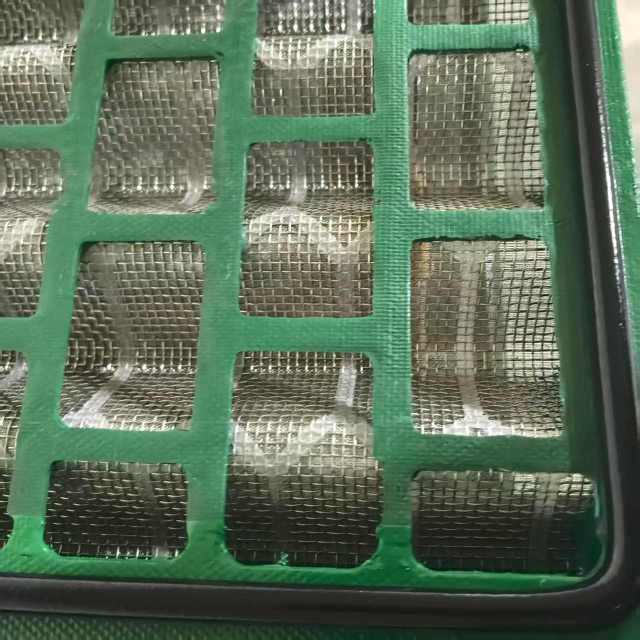
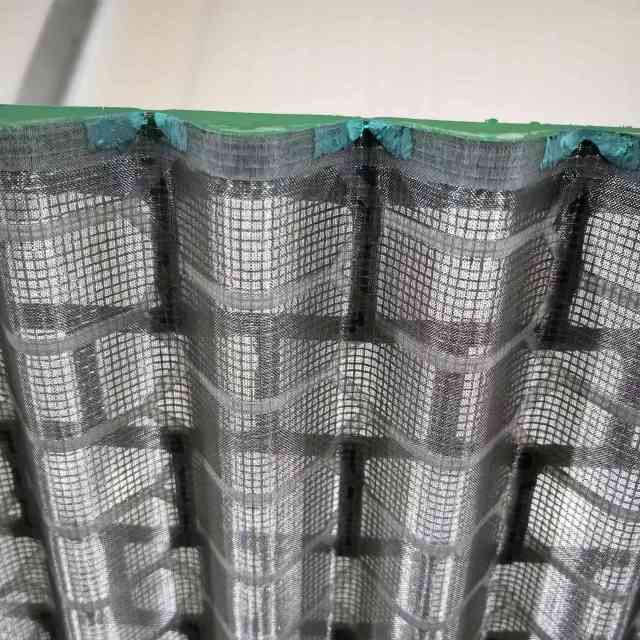
The 503/504 corrugated replacement screens are the wave-profile panels for Derrick FLC500 shakers, supplied as FLC503 and FLC504. They take the same deck seat, the same tension hooks and the same edge strips as the panel already on your machine, so a change-out stays a straight swap rather than a conversion. What changes is the mesh between the edges: instead of lying flat, the wire is formed into corrugations that put more working screen into the same footprint and hold their shape while the shaker runs at full stroke.
We build these panels as a shaker screen supplier to drilling contractors, solids-control crews and supply houses. The mesh, the fused edge and the frame do not change with the size of the order.
Orders usually come in two shapes: a deck set going straight onto a rig, and wholesale shaker screens stock held for a region. Both are made on the same line and go through the same checks, which matters when a yard is topping up stock between campaigns and cannot afford a batch that behaves differently from the last one.

Corrugated vs Flat Panels
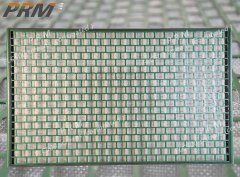
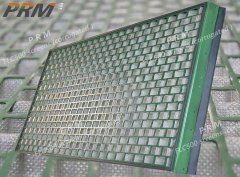
Both profiles are built for the same deck, so the choice is about how hard the shaker has to work, not about whether the panel will fit. A flat panel is a single plane of mesh. A replacement shaker screen in corrugated form folds the same footprint into a wave, which puts more mesh in the flow path and stiffens the panel at the same time.
Reach for the corrugated panel when the deck is the constraint: high circulating rates, heavy solids off a large hole, or mud arriving at the shaker faster than a flat panel can pass it. In those conditions the extra surface does the work, and the panel keeps passing fluid instead of backing up and letting mud ride over the edge unscreened.
On fit the two profiles are interchangeable; on output they are not. A deck that is already short of throughput will show the difference within a few stands, which makes shaker screens replacement a sensible moment to move a deck from flat to corrugated instead of simply matching what came out.
If you run a mixed fleet, or hold wholesale shaker screens stock across several shaker models, keeping both profiles on the shelf lets the mud programme decide which one goes on each deck.
Throughput & Open Area
- ≥92% effective screening area — almost the whole panel is working mesh; the blank border and the support metal are held to the minimum the frame needs.
- 18% more working area than a standard panel — the same shaker and the same footprint, with more open screen, which shows up as faster processing and less fluid leaving the location with the cuttings.
- 2.1x kD conductance — the corrugated channels move fluid through the panel at roughly twice the conductance of a conventional screen of the same cut, so the deck keeps pace as circulating rates rise.
- No bypass in high-density mud — a panel that cannot pass fluid quickly enough lets mud run over its surface unscreened; the higher conductance keeps the whole panel working when the mud is heavy.
- A stiffer section under load — the wave resists the bowing that flattens a flat mesh against the flow and quietly narrows the aperture.
- Same build, panel after panel — the panels are formed and fused on the same tooling, the part of the job a shaker screen manufacturer controls directly, so a full deck change-out behaves like the set it replaced.
Construction & Edge Build
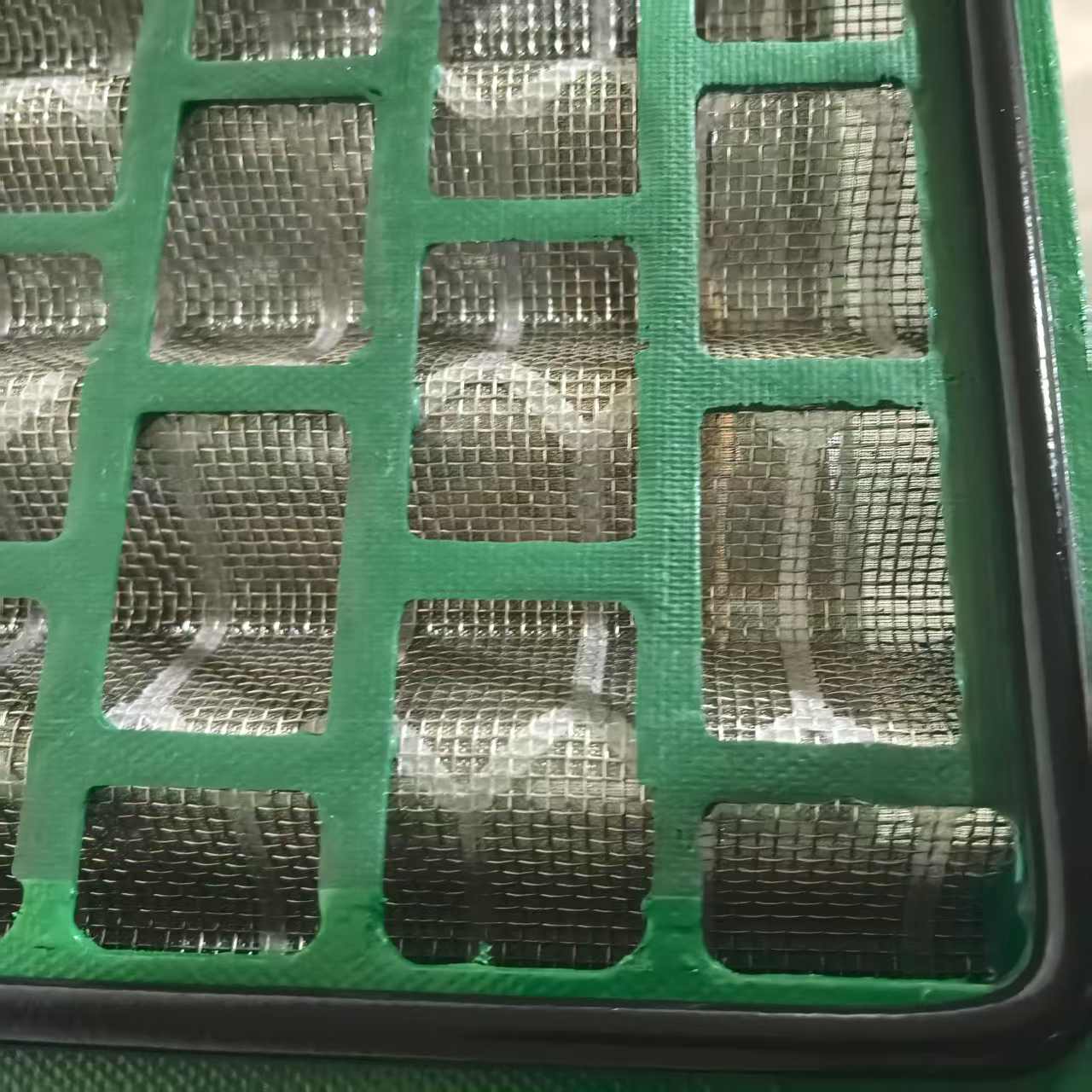
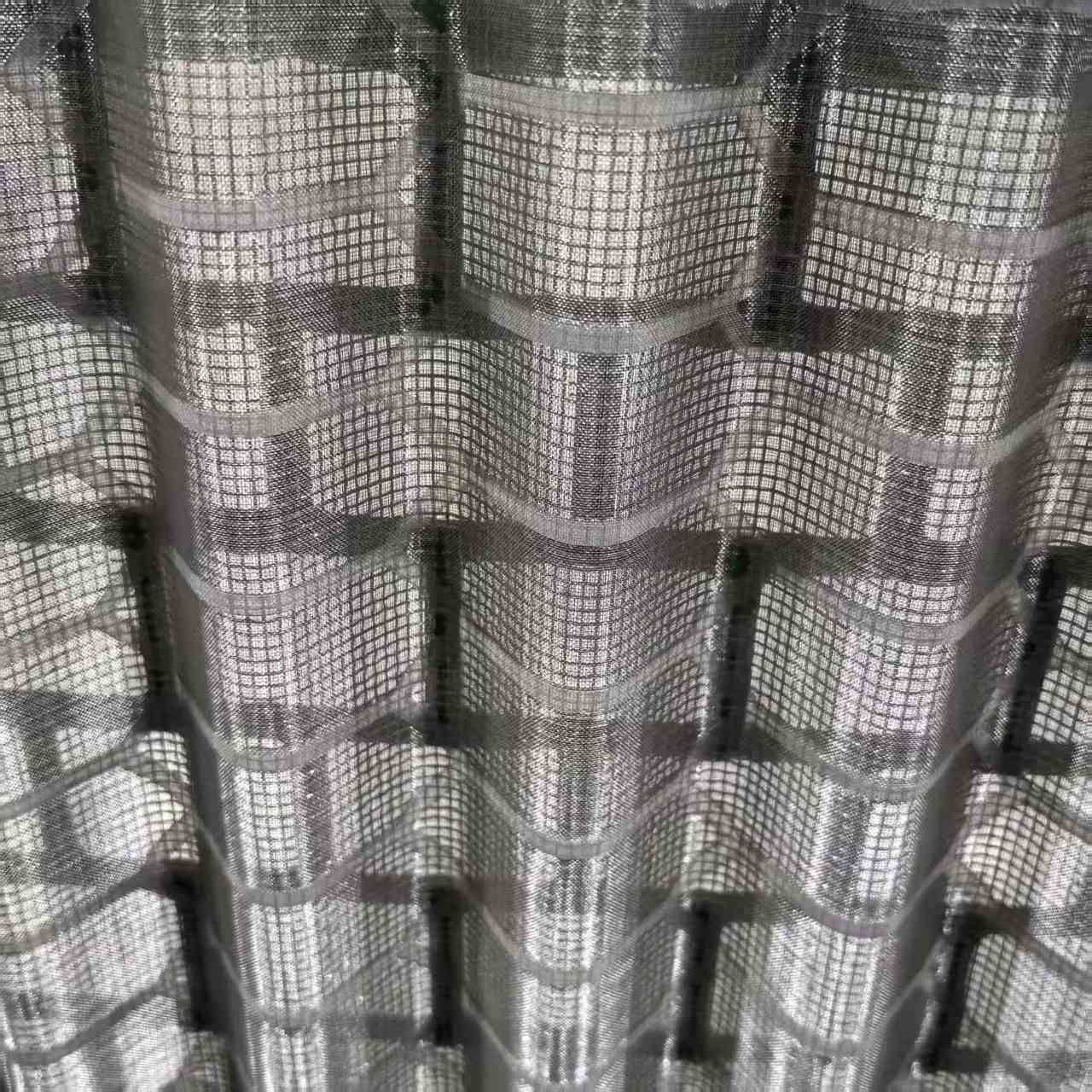
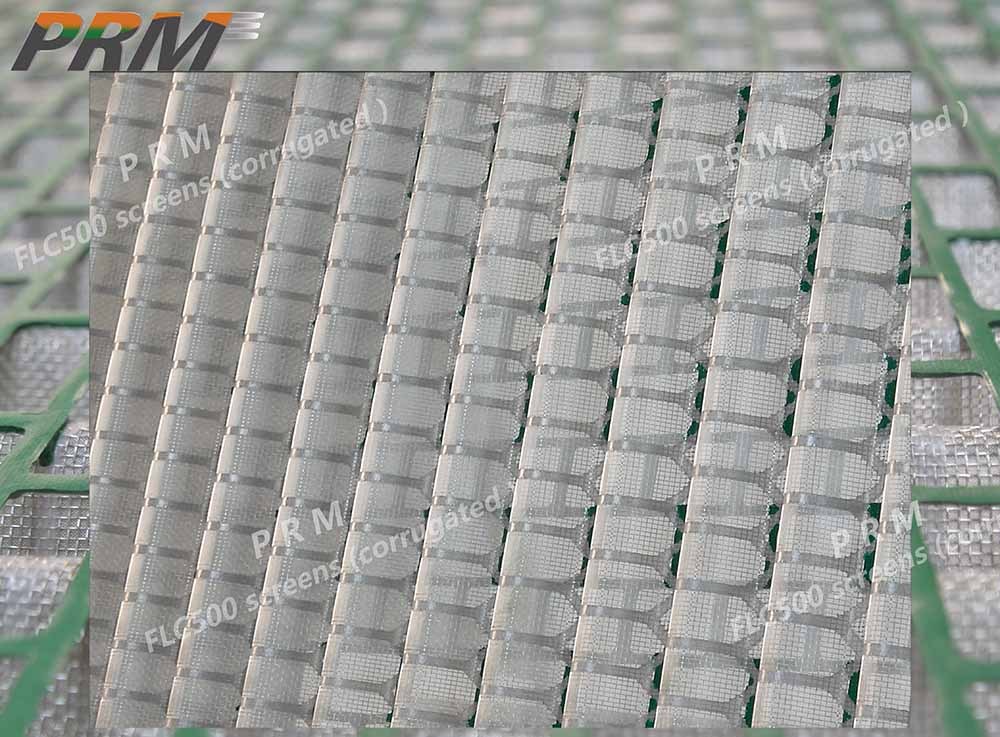
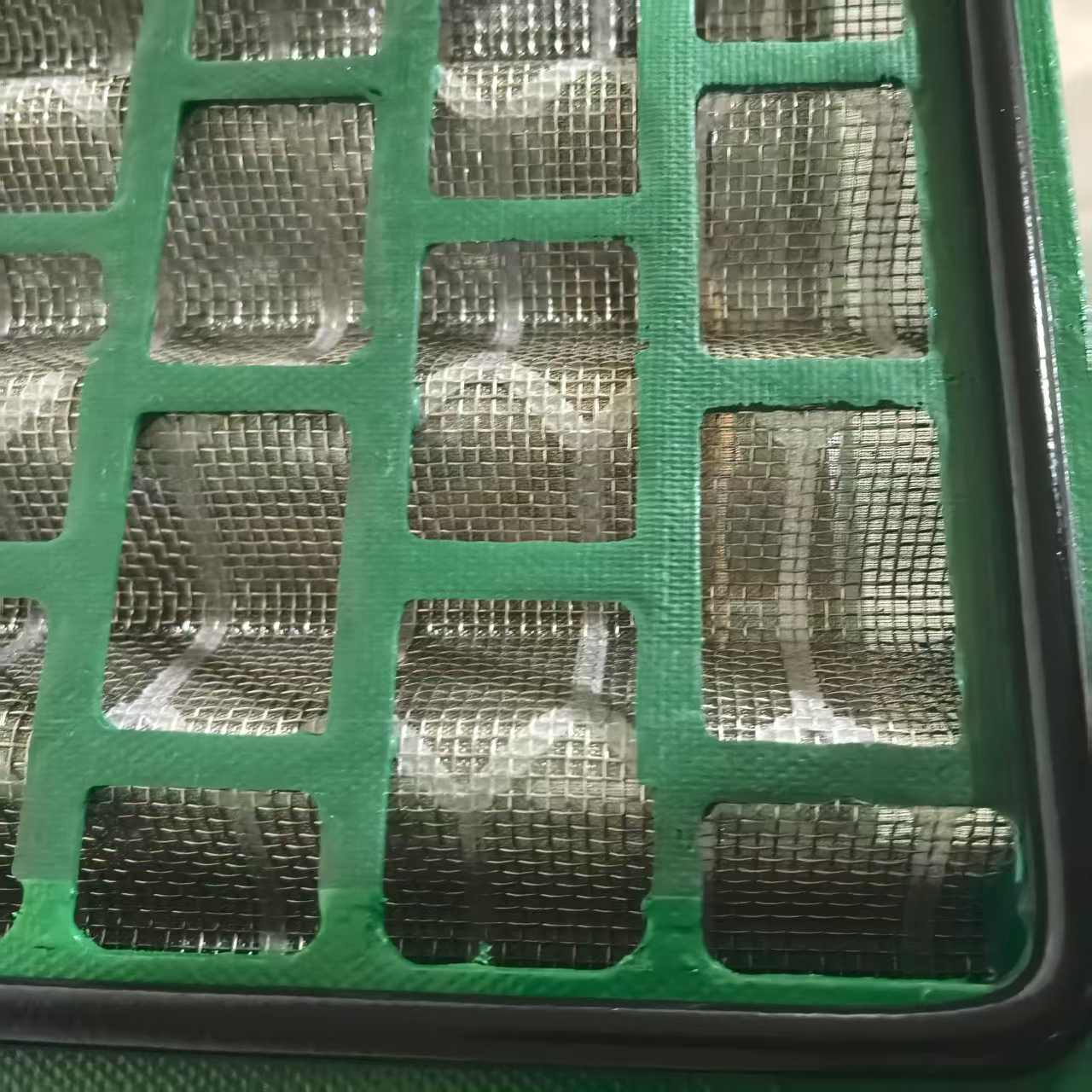
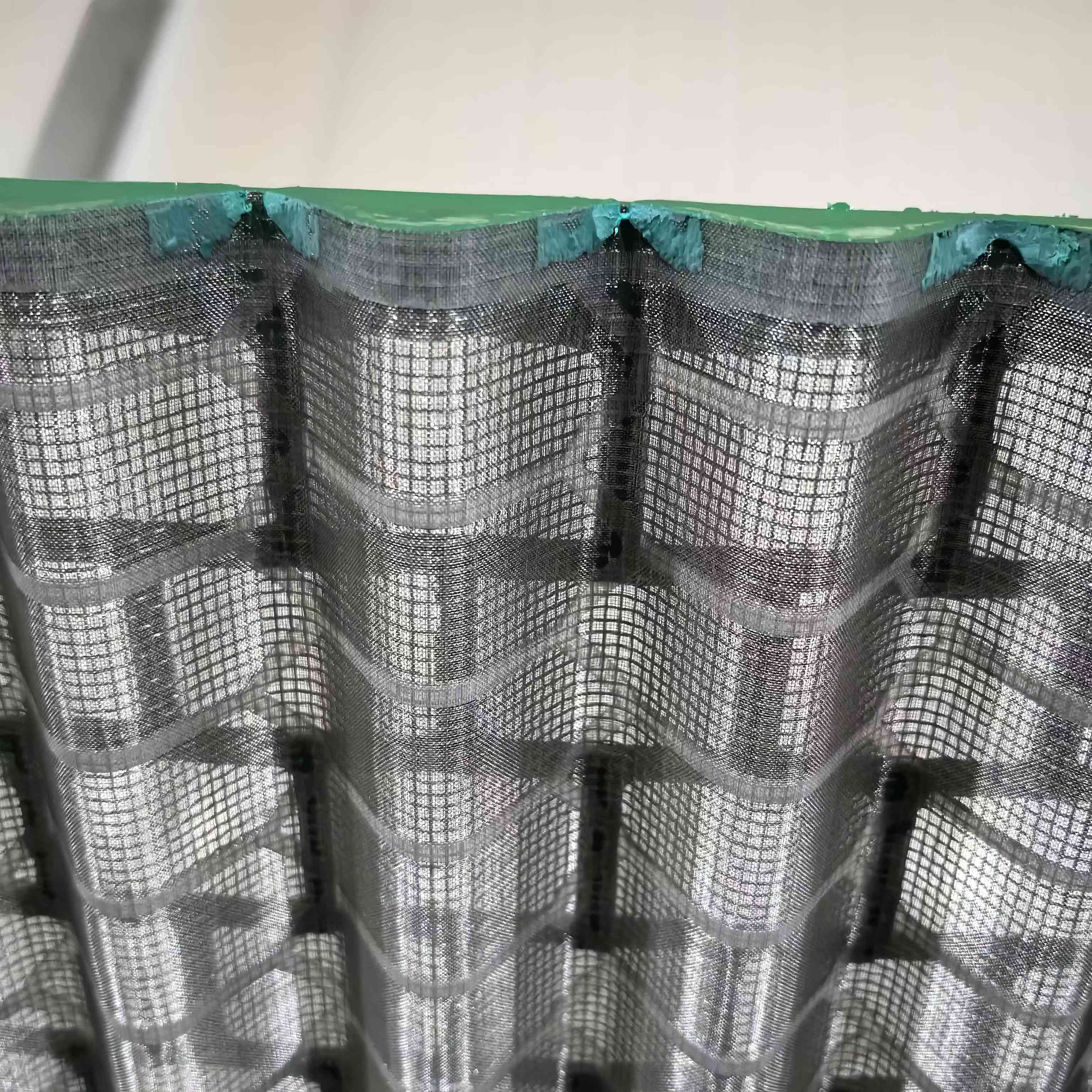
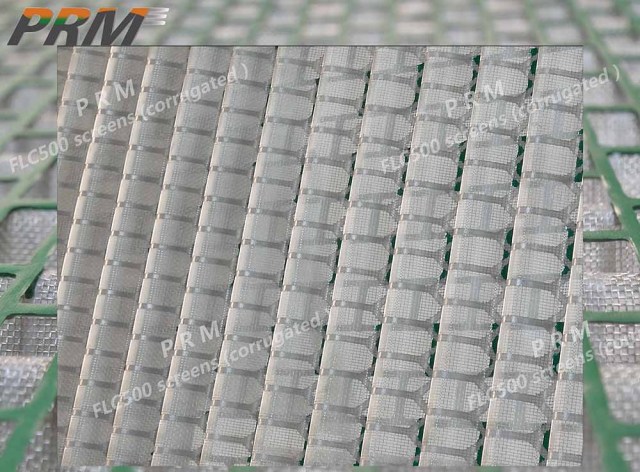
- Woven stainless steel wire mesh — the screening surface is woven wire, which keeps the aperture consistent across the panel and stands up to sand, cuttings and abrasive solids.
- Corrugated forming — the woven sheet is shaped into a wave and bonded to a rigid backing, so the crests carry the vibration load and the mesh stays evenly tensioned instead of sagging between supports.
- Laser-fused edge reinforcement — the perimeter is where a panel usually starts to let go, and fusing the wire to the frame there keeps the mesh anchored under continuous vibration.
- Anti-fatigue wire technology — the wire is chosen to resist work-hardening and breakage, the process that turns a slow wear pattern into a sudden failure mid-circulation.
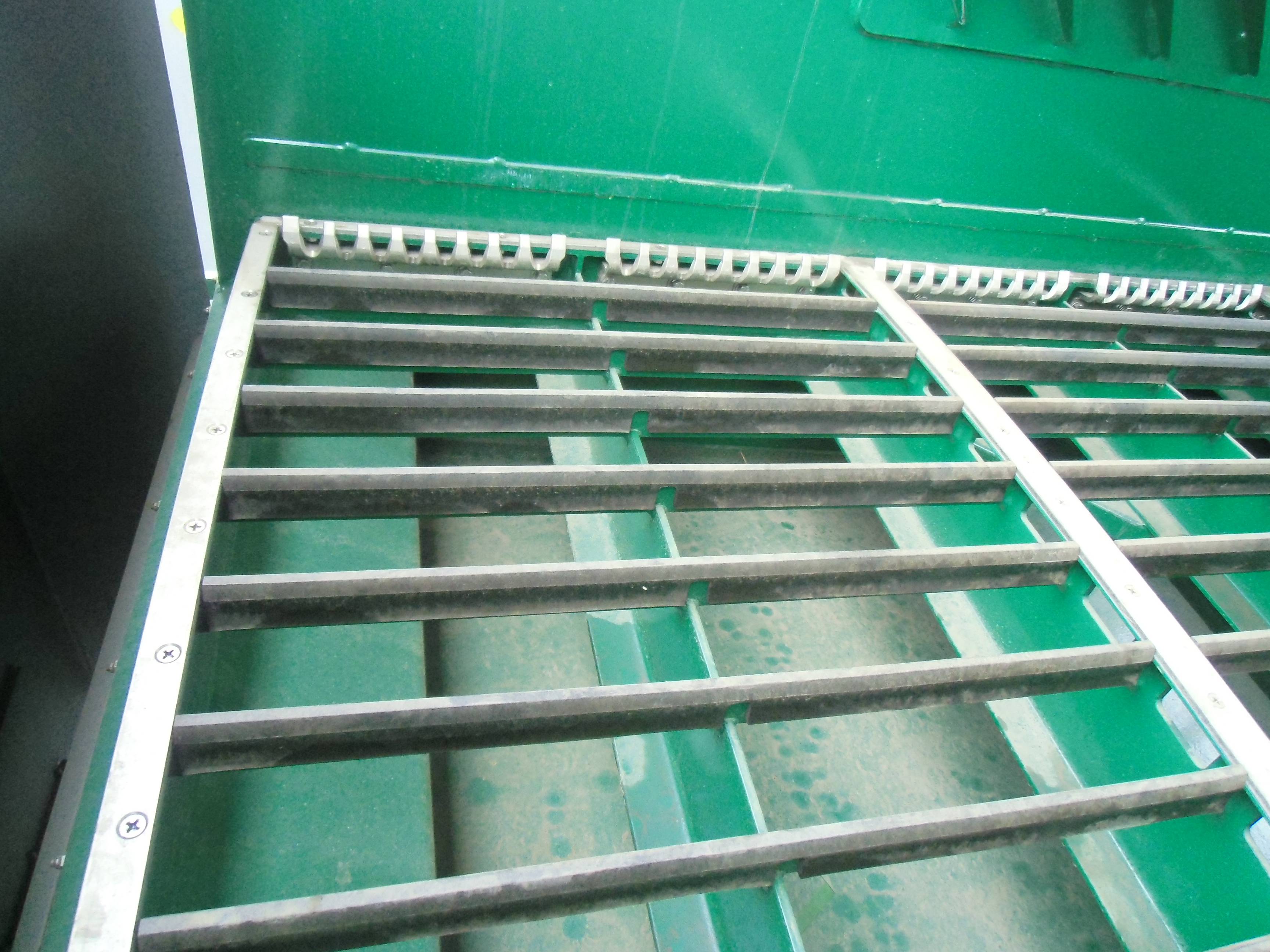
- Tension hooks and reinforced edge strips — the hooks locate the panel on the deck, and the strips absorb the handling damage that happens when a panel is dragged across a frame.
- Made in our own works — we form, fuse and finish the panel ourselves as a shaker screen manufacturer, so the mesh specification and the edge treatment are controlled where they are set rather than bought in.
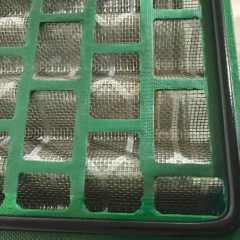
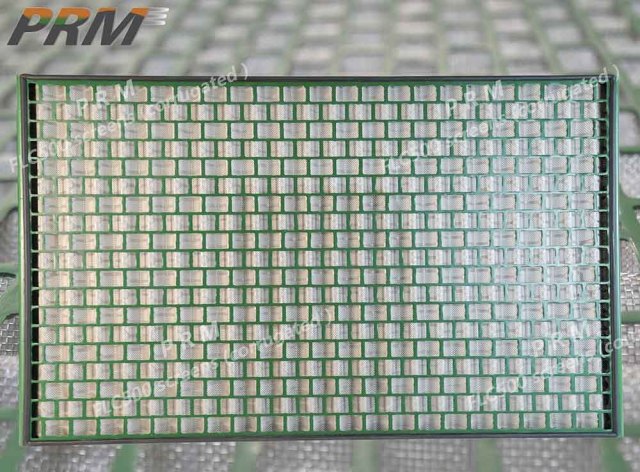
- Finished to match the range — the frame carries the standard green workshop finish and dark side rails, which makes a bent corner or a cracked rail easy to pick out on a dirty deck.
- Spares that match the set — ordering from a dedicated shaker screen parts supplier means a top-up panel arrives built to the same drawing as the deck set already running on the rig.
Quality Verification
| Property | Detail |
|---|
| Validation body | Intertek, Houston, TX |
| Validation type | Independent third-party testing |
| Reference standard | API RP 13C |
| Conductance validation | Carried out on 100% of production |
| Tensile strength validation | Carried out on 100% of production |
| Wash-down testing | 6 cycles, with no recorded loss of performance |
| Wash-down purpose | Confirms performance holds across repeated cleaning cycles |
| Coverage | FLC503 and FLC504 panels alike |
| Test report | Available to review before ordering |
Service Life & Screen Economy
Two numbers decide whether the corrugated panel pays for itself, and as a shaker screen manufacturer we are happy to be held to both. Service life first: in abrasive service these panels run to roughly twice the life of a standard panel, with 1,200+ hours of continuous operation behind that figure. Second, consumption — fewer panels used per campaign means fewer deck stops, less time on the shaker in PPE and a slower draw on the shelf.
Cost is where the life figure turns into money. Fewer panels consumed per metre drilled is the measure that matters, and measured against standard panels the annual screen spend comes out roughly 40% lower on the same deck. Buyers comparing us with any other shaker screen supplier usually begin with the price per panel and end with cost per metre drilled; the second number is the one that should decide the order.
We would rather you proved the life figure on your own shaker than took it from a web page: run a set, log the hours alongside the solids load and the mesh you are running, then compare it with what the flat panel was delivering. When the numbers hold, shaker screens replacement becomes a scheduled job instead of an emergency one.
Fitting & Change-Out
- Shut the shaker down and isolate it before any shaker screens replacement work starts, then wash the deck frame clear of caked solids so the seat, hooks and wedges are visible.
- Note the deck position and the way the old panel sat before you lift it — the corrugations should run in the same direction as the panel coming out.
- Lift the old panel by its edges, never by the mesh, then check the frame for bent hooks, cracked rails or build-up that would hold the new panel off its seat.
- Seat the replacement shaker screen so the tension hooks engage and the reinforced edge strips sit flat, without forcing or hammering it down.
- Run a hand around the perimeter: any gap between an edge strip and the frame is a path for unscreened mud.
- Restart the shaker and watch the first minutes of flow at the panel edges, then re-check tension once the deck has warmed up and settled.
- Keep the used panel to one side until the new one has run a shift — as a shaker screen parts supplier we would rather see the failed edge than guess at what took it out.
Specifications
| Property | Detail |
|---|
| Model | FLC503 / FLC504 |
| Shaker family | Derrick FLC500 |
| Panel type | Replacement screen, corrugated profile |
| Screening surface | Woven stainless steel wire mesh |
| Mesh selection | Stated per order against the cut point you run |
| Panel construction | Corrugated mesh bonded to a rigid frame |
| Edge treatment | Laser-fused reinforcement, reinforced edge strips |
| Deck fixing | Tension hooks |
| Frame | Rigid frame with dark side rails |
| Trademark notice | Derrick and pyramid are trademarks of Derrick Equipment Company |
Ordering & Delivery
- Send the shaker model and the deck position you are filling on your FLC500. As a shaker screen supplier we match the panel and its fixing from that information before anything is quoted.
- Tell us the mesh designation you are running, or send the marking from the old panel, and we will quote that cut.
- Confirm how many panels the deck carries, so the quote covers a full change-out rather than a single panel.
- Say which mud system you run and how heavy the solids load is; we will tell you whether the corrugated profile is worth the step up from flat on your shaker.
- Packing and shipping terms are agreed with your sales contact when the order is placed. Export orders normally travel as stacked, edge-protected bundles, so raise any special marking or pallet size at that point.
- Price, payment terms and the delivery schedule are confirmed per order with your sales contact. As a shaker screen parts supplier we quote against the deck you are running, not against a catalogue figure.
- For wholesale shaker screens orders covering several shakers or a stock position, send the full model list in one go so the whole fleet can be quoted together.
- - Order the cut, not the profile. The corrugated shape changes how much mesh sits in the flow path, never the size of the opening, so the panel you need is set by the mesh designation — the API RP13C number the mud programme is written around. A corrugated panel and a flat panel of the same designation separate at exactly the same point; the difference between them is throughput, not cut. - Read the marking off the panel coming out. The designation is printed on the panel edge or on its label. Note it, or photograph it, before the old panel leaves the deck — a washed-off label is the most common reason a replacement set arrives on the wrong cut. - Specify the cut for each deck position, not for the shaker as a whole. An FLC500 deck carries a scalping position ahead of the fine screens, and that position often runs a coarser designation than the panels behind it. Giving us one number for the whole machine is how a deck ends up half right. - Send the panel count with the designation. Tell us how many panels the deck holds so the set comes off the line together, with the same tension and the same edge treatment on every panel in the change-out. - Edges give the first warning. A bright polished line or a wire breakout along the fused edge strip appears long before the middle of the panel is spent, and it is easiest to see on a panel that has just been washed down. That is the point to place the order, not the point where the wire lets go. - Watch the crests and the trough. Once the wire on the high points flattens and shines, the aperture there has closed and the panel is passing less fluid than it did. The same story shows up as a rising fluid level in the trough, mud tracking over the edge strips and a wetter cuttings discharge. - Check the seat while you check the mesh. A panel that has started working under the stroke polishes the frame where it lands and wears its hooks bright. If the locking wedge sits deeper than it used to, the panel has been running loose and the deck frame needs a look as well as the screen. - Log hours against the designation. Record the hours, the cut and how heavy the solids load ran for each panel. Two or three change-outs give you an interval you can plan a stop around, which is what turns a shaker screens replacement from an emergency into a scheduled job — and one spare panel per deck position on the shelf means the swap happens on the same shift.
Technical Support & Model Matching
Technical support comes from the team that builds the screens, not a call centre. With six years in this industry and our own factory, we can look at your machine, its make and model, and the position you need to fill, then confirm the correct match before your order ships. If a part wears early or fits badly, our engineers work through the problem with your crew and provide installation and start-up guidance by document, photo or video.
FAQ
Will these panels fit my FLC500 shaker?
Yes. They are built for the Derrick FLC500 family as FLC503/FLC504 panels and are compatible with all FLC500 shaker configurations, so the deck seat, tension hooks and edge strips line up with the panel that comes out. They are replacement shaker screen panels supplied by PRM, not original parts: Derrick and Pyramid are trademarks of Derrick Equipment Company, and we make no claim to be the OEM.
How can I tell a corrugated panel is worn before it fails?
Watch the edges first. A bright line or a wire breakout along the fused edge is the usual warning, and it shows up far more clearly on a panel that has been washed down than on a loaded deck. Then look at the crests: once the wire on the high points has flattened and polished to a shine, the aperture there is closing and the panel is passing less fluid than the deck needs. A rising fluid level on the shaker, mud tracking over the edge strips and a wetter cuttings discharge are all signs of the same thing. Catch it at that stage and a shaker screens replacement becomes a planned stop instead of a mid-circulation breakdown.
Does the corrugated profile change the cut I get?
No. The cut is set by the mesh designation; the corrugations change how much mesh sits in the flow path, not the size of the opening. You get the same separation point as a flat panel of the same designation, with more open area feeding it. Mesh choice still comes down to the mud programme — a finer designation returns cleaner fluid and passes less of it, a coarser one moves volume — so if you are changing the cut at the same time as the profile, change one variable at a time and watch fluid losses for a few stands.