Product Overview
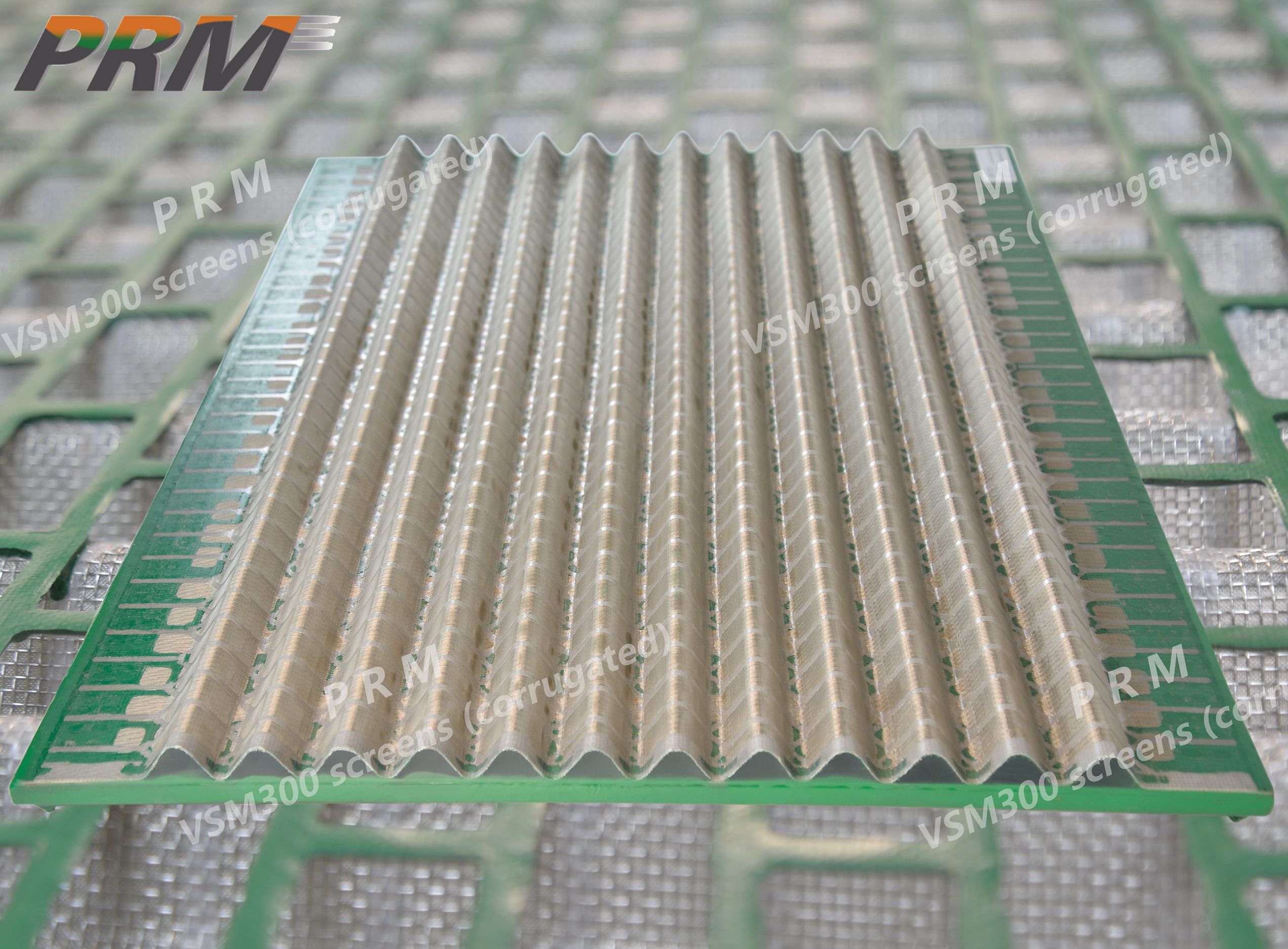
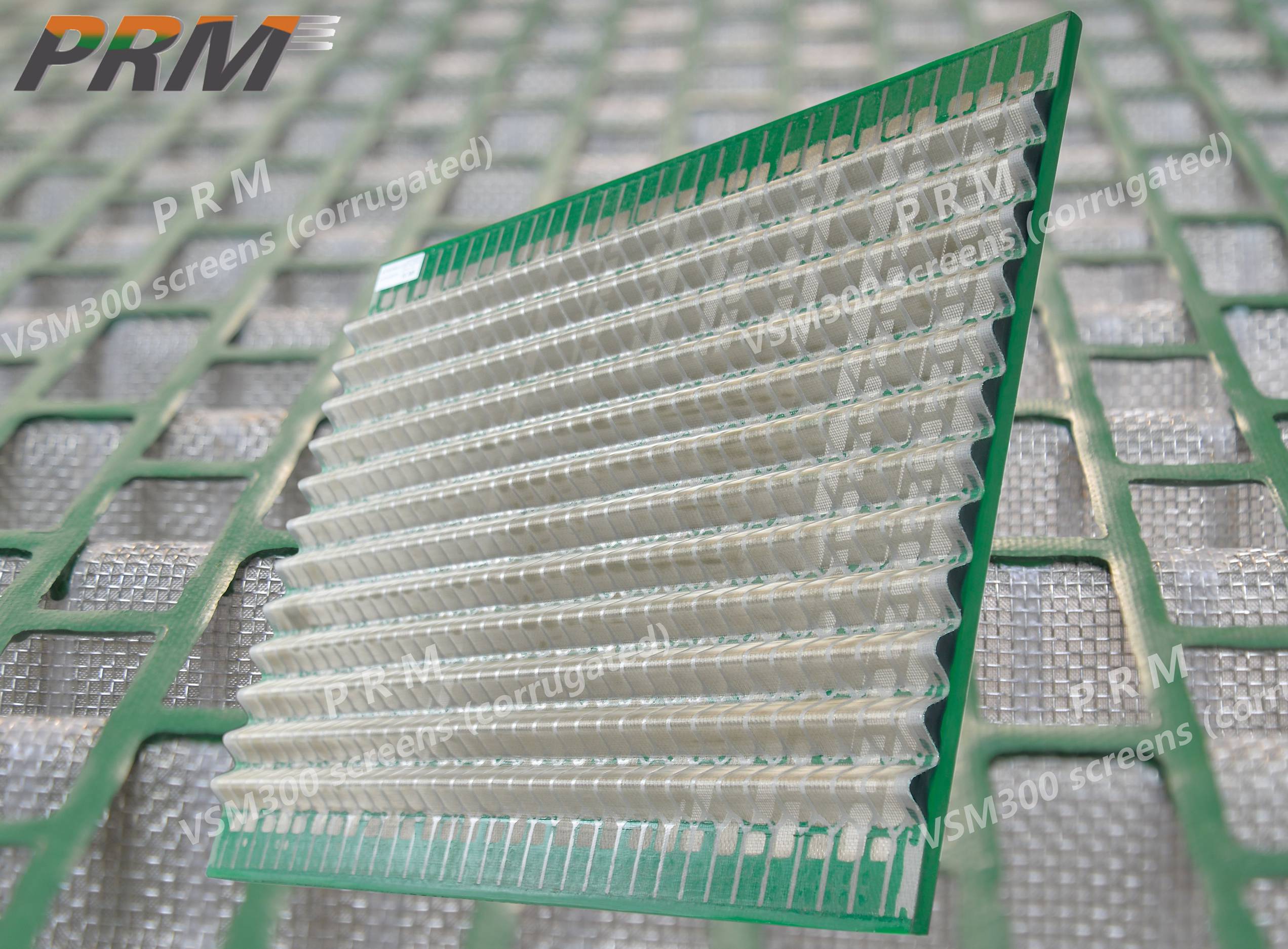
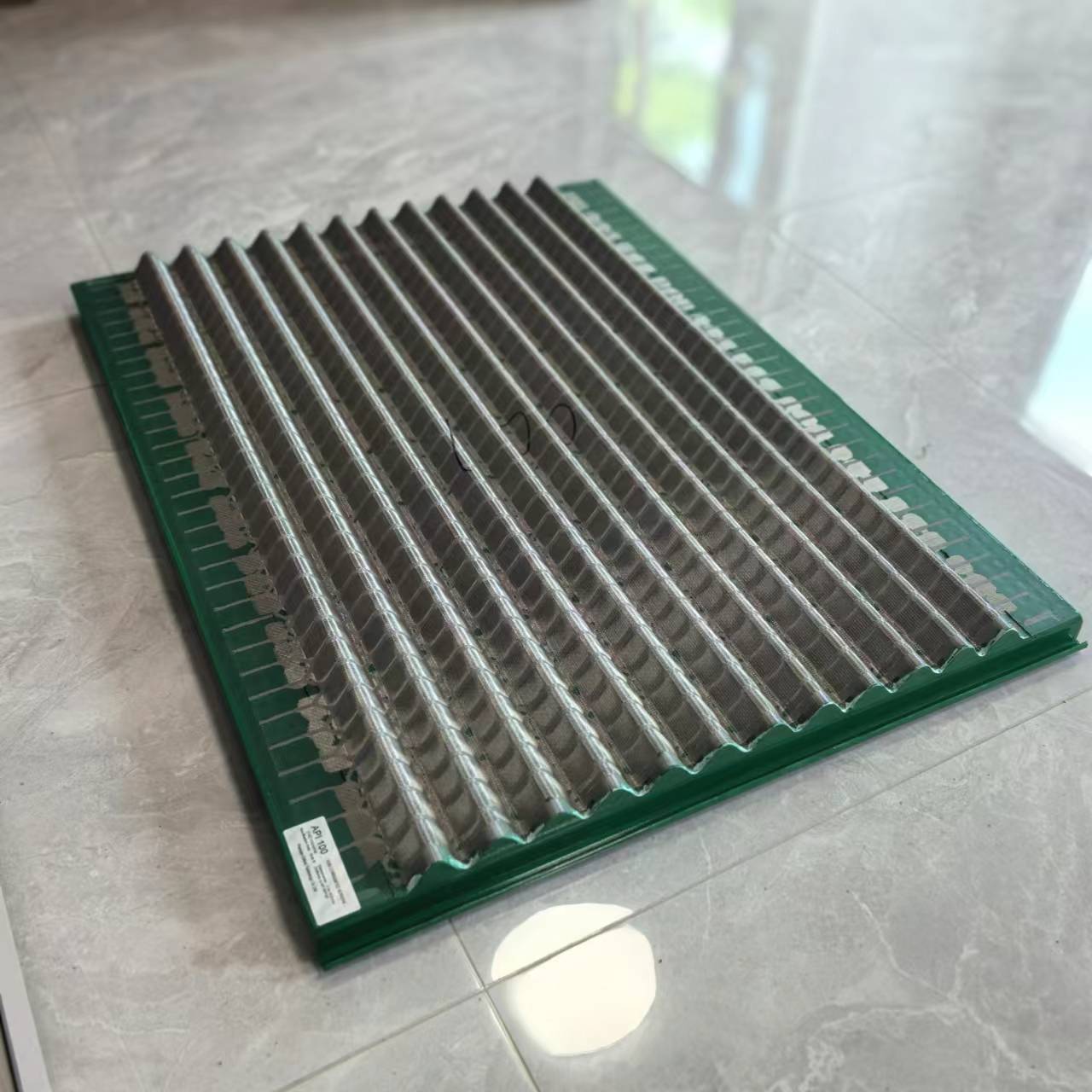
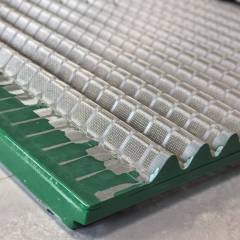
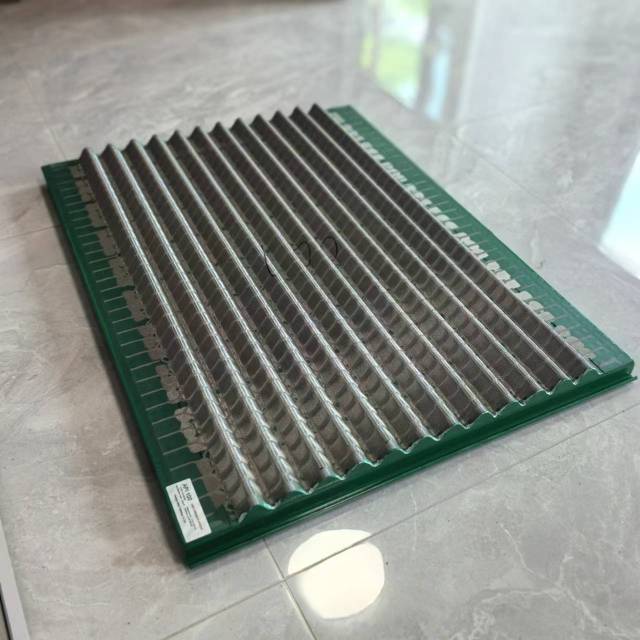
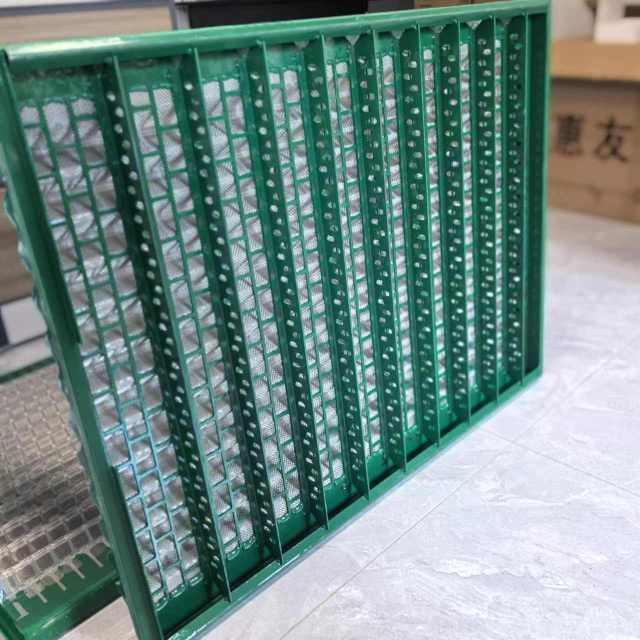
The heaviest solids load on a shale shaker lands on the primary deck, and this panel is cut for exactly that position. It is a corrugated screen for the upper deck of a two-deck shaker, formed from a single laser-cut steel sheet rather than a welded frame, with the woven cloth bonded down onto the corrugations. Each panel arrives formed and ready to seat, so a change-out is a lift-and-set job rather than a re-mesh on the rig floor. Contractors running several rigs of the same make usually standardise on it so the spares rack stays simple. Buying from a shaker screen supplier that cuts and bonds the panel in its own plant keeps the frame geometry, the mesh grade and the cut point in one set of hands, which is what makes the tenth order behave like the first. These are replacement parts, not OEM components. Brandt, Cobra, King Cobra, Venom, M-I SWACO, MONGOOSE and MEERKAT are trademarks of their respective owners, and PRM is not affiliated with them. - Effective solids separation — the coarse fraction comes out at the first stage, so the fluid moving forward is cleaner and the programme runs without the interruptions that come from a mud system loading up. - Durable one-piece construction — a single sheet, bent and bonded, resists fatigue and abrasion in formations that chew through lighter panels. - Improved filtration — the corrugated open area gives fluid more room to pass, so the cloth blinds less and the equipment downstream meets fewer solids. - Cost-effective across a fleet — the same panel serves every primary deck position of this size, so a contractor or a stockist buying wholesale shaker screens carries one part number instead of several. - Wide compatibility — it seats on the deck position it was cut for with no adapter, no re-drilling and no change of hardware, and it runs on oil-based or water-based fluid. - Consistent build — every panel comes off the same line from the same shaker screen manufacturer, so the fit you approve on the first order is the fit you get on the tenth. - Single-source supply — as the shaker screen supplier we quote, cut and document the panel ourselves, so a question about fit, grade or paperwork reaches the people who built it.
One-Piece Steel Sheet Construction
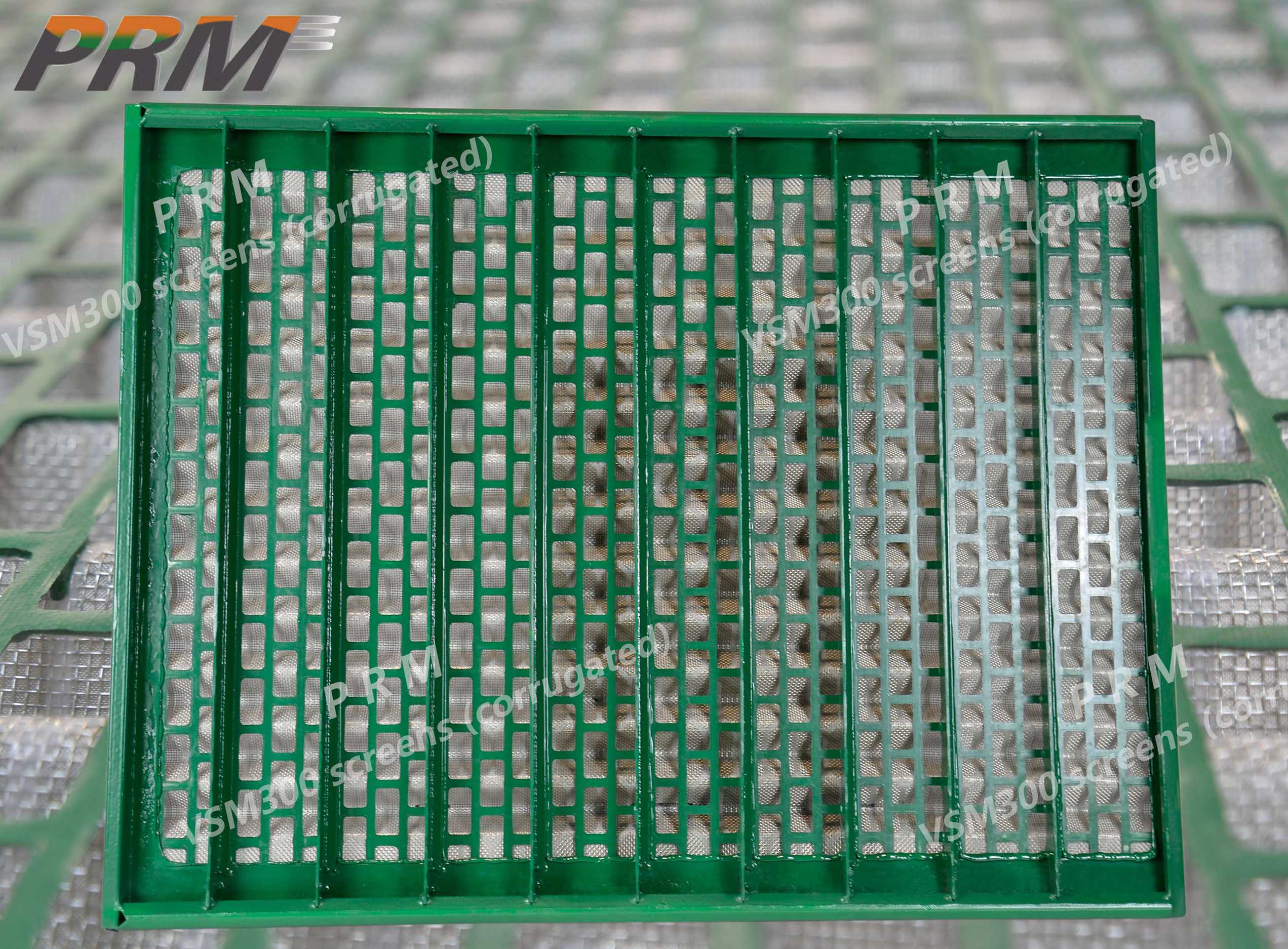
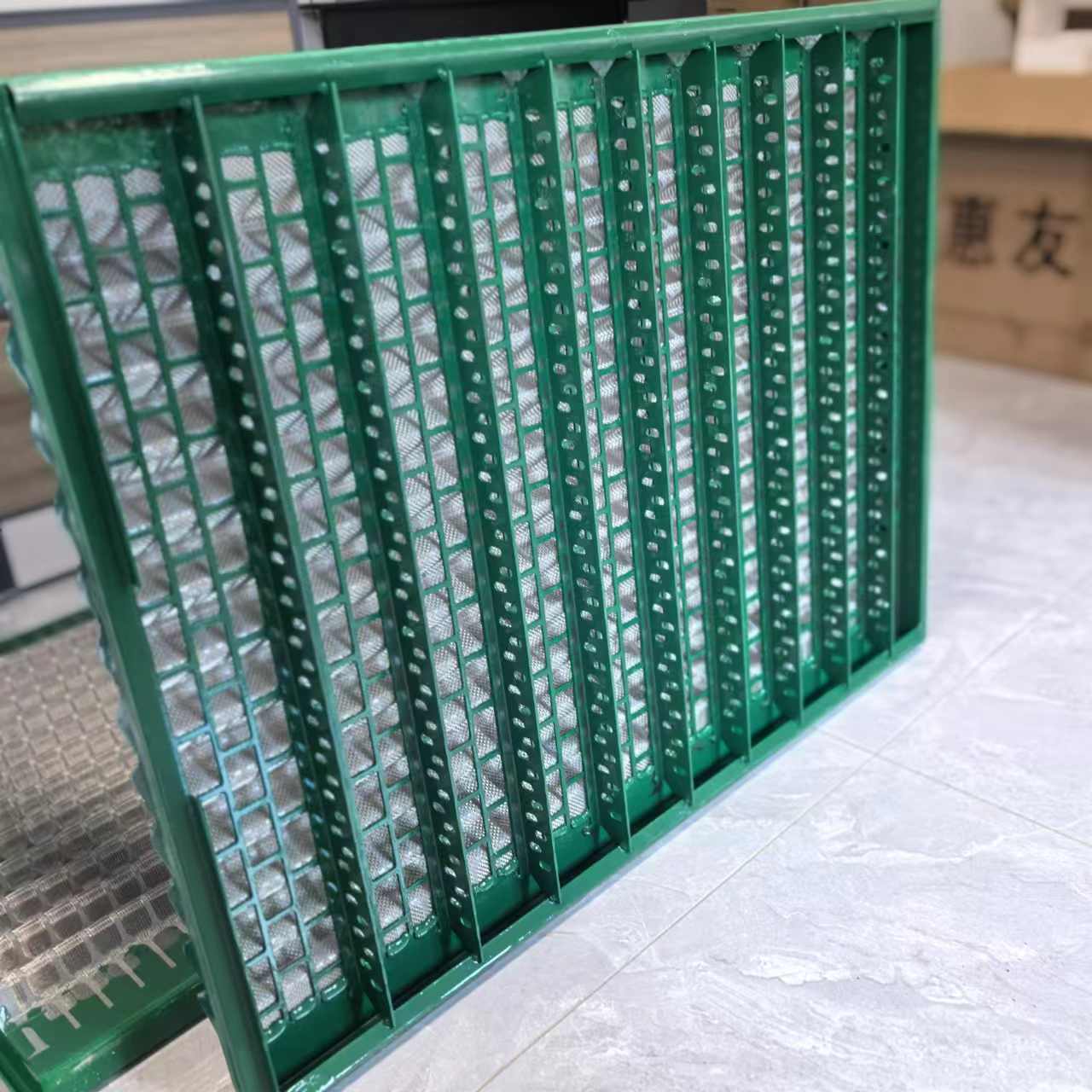
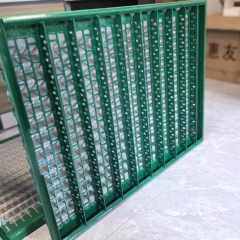
Every panel begins as one flat sheet of steel. Laser cutting profiles the outer edge and the internal cross supports in a single operation, and the sheet is then bent into its finished shape, so the frame, the ribs and the load-bearing edges stay one continuous piece of metal. Nothing is welded across the width of the frame, which is where a fabricated panel usually starts to move once the shaker is running.
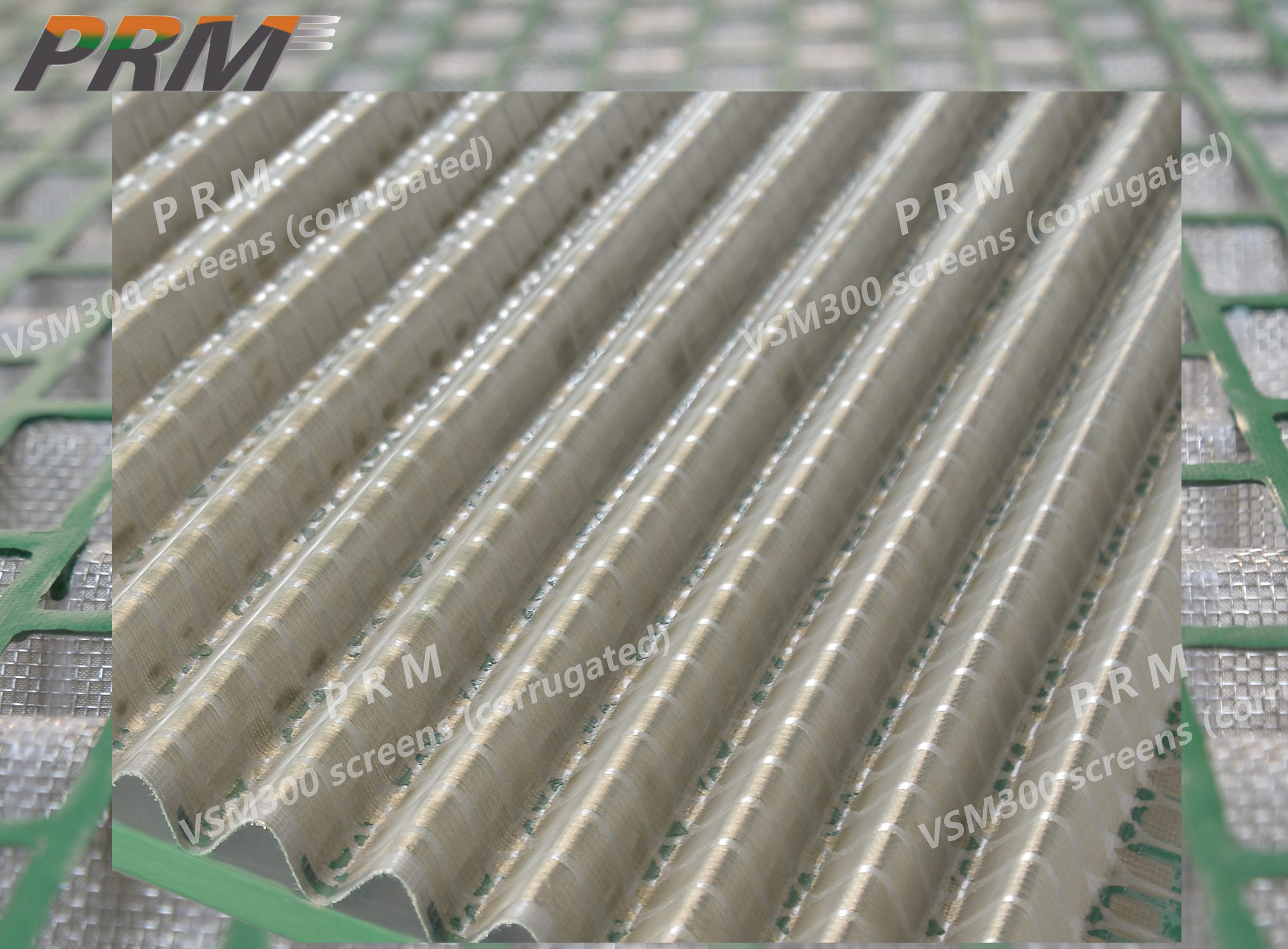
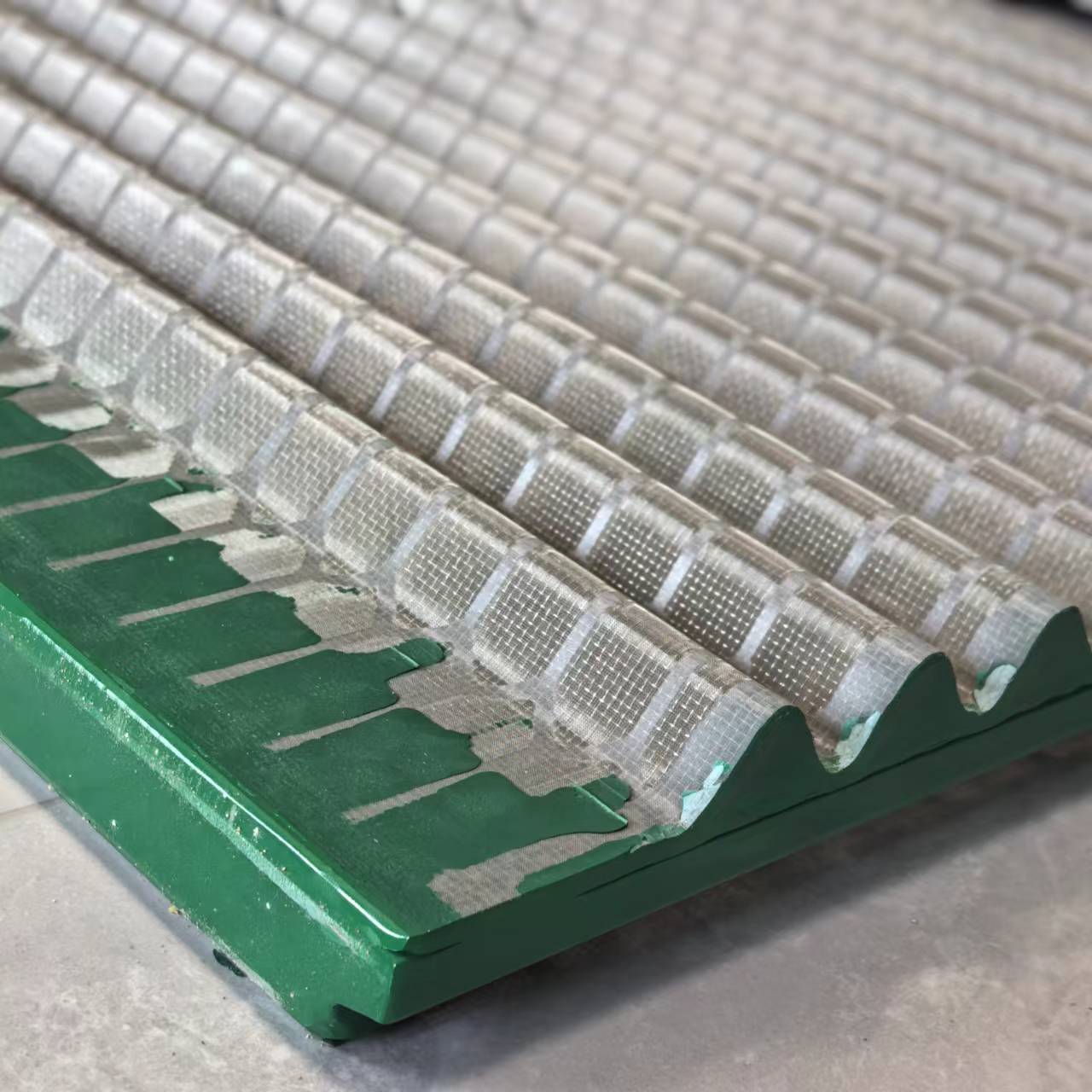
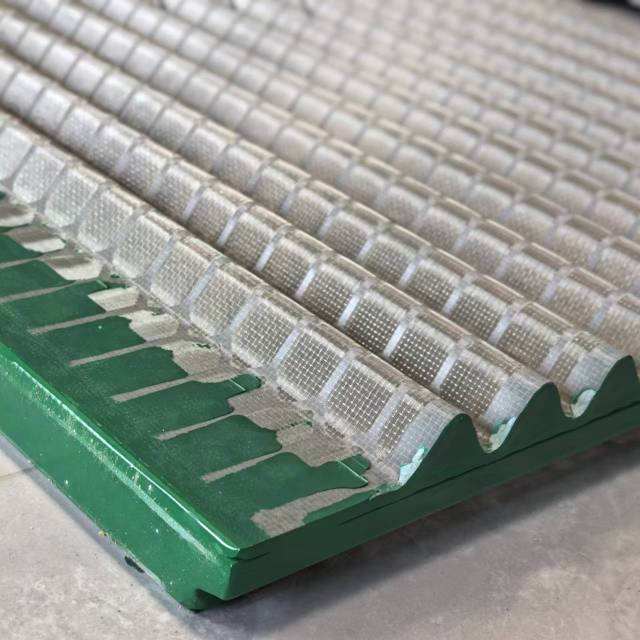
The cross supports are laser cut rather than added as separate bars. That takes weight out without taking stiffness out, and it takes away parts that could work loose and drop into the flow. The corrugated woven cloth is then bonded to the frame across the whole panel rather than clamped at the ends, so the mesh stays in contact with the corrugations and holds its aperture when the deck is under load.
Because we are a shaker screen manufacturer rather than an assembler, both the frame profile and the mesh bond are controlled in our own plant. The one-piece construction is a patented PRM design.
Fluid Compatibility
- Both mud bases, one part — the panel runs in oil-based and water-based drilling fluids without a change of specification, so a programme that switches fluid systems does not need a second screen on the rack.
- Built around PRM Drilling Fluids systems — dimensioned to seat on PRM Drilling Fluids solids control equipment, where the deck, the retention hardware and the panel are matched to each other.
- Cut point holds across fluids — separation is set by the cloth and its API designation, not by the base fluid, so the cut the deck is asked to make stays the same when the mud system changes.
- Steel frame, bonded cloth — the frame does not take up fluid the way a polymer component can, and the bonded mesh has no separate tensioning element to work loose in service.
- Unusual chemistry — if you run heavy brine, a high-temperature package or an uncommon additive, tell us before ordering and we will check the frame finish and the bonding against it.
Primary Deck Solids Control
- First stage in the mud train — the primary deck takes the full return flow and the coarsest cuttings, so this is the panel that absorbs the abrasion and the impact before the mud moves on to the finer stages.
- Corrugations keep the bed clear — the profile forms shallow channels across the panel, so solids ride the crests and travel to the end of the deck instead of sitting on a flat cloth and blinding it.
- Capacity when the flow surges — a corrugated deck carries a deeper curtain of mud than a flat panel of the same footprint, so a fast or heavy flow gets screened rather than running over the sides.
- Parts that arrive ready — the panel comes out of the crate as a finished unit with no separate cloth, gasket or tensioning kit to order, which is what most crews want from a shaker screen parts supplier.
- Protects what comes next — cleaner fluid leaves the deck and reaches the desander, desilter and centrifuge carrying less coarse solids, which is where the wear and the maintenance hours usually sit.
- Takes the hits — tramp material, lumps and slugs of solids meet a one-piece steel frame that flexes and returns, rather than a joint that opens up.
- Change-outs on your schedule — because the panel holds its shape to the end of its life, shaker screens replacement can be planned around the drilling programme instead of being forced by a failure mid-section.
Specifications
| Panel type | Corrugated, one-piece laser-cut steel sheet |
| Deck position | Primary (upper) deck of a two-deck shale shaker |
| Shaker compatibility | VSM300 shaker units |
| Panel dimensions | 890 mm × 686 mm × 73 mm |
| Weight | Approx. 14 kg |
| Frame | Single steel sheet, laser cut and bent, with laser-cut cross supports |
| Mesh | Corrugated woven wire cloth, bonded to the frame |
| Open area | Up to 21% more non-blanked open area than a standard corrugated panel |
| Cut point designation | API RP 13C screen designation |
| Fluid compatibility | Oil-based and water-based drilling fluids |
| Pre-tensioned build | Available as an alternative construction |
Steel or Composite Construction
We build this deck in two constructions: the one-piece laser-cut steel sheet on this product, and a composite frame. As a replacement shaker screen, the steel panel is the right call where the primary deck takes high-impact loading — coarse cuttings, gravel, heavy solids slugs and abrasive formations where the frame, not the cloth, is usually what gives up first. It also suits decks that run hot and heavy, and rigs that cannot absorb an unplanned stop while a panel is changed.
The composite build is lighter to lift and damps vibration through the frame, which suits steady, high-volume decks where the crew is changing panels often. If you are weighing the two for a particular rig, tell us the mud weight, the solids loading and how often you are changing panels today; as your shaker screen supplier, we can usually settle it from those three answers without much debate.
Cost-Efficient and Low Maintenance
Screens are a consumable, and the number that matters is not the price on the invoice but the cost of the hours between change-outs. A panel that outlasts the one it replaced cuts three costs at once: the panels themselves, the crew time spent swapping them, and the production lost while the shaker is down. There is a quieter cost that never shows on the invoice. A panel that seats correctly first time removes the re-work, the second lift and the argument about whether the deck or the screen is at fault. That traceability is easier with a shaker screen parts supplier who also cuts the frame, because a wear pattern or an early failure can be read back against the batch it came from rather than guessed at.
Handling and Installation
- Isolate and wash down — shut the shaker in, lock it out, and wash the deck so the rails and the retention hardware are visible before anything is lifted.
- Lift the old panel squarely — pull it straight up rather than dragging it across the rails, and keep it; the grade and the part number stencilled on it are the reference for the next shaker screens replacement.
- Check the deck first — worn rails, flattened seals or a bent retention bar will cost you a new panel, so replace anything that no longer sits proud before the new one goes in.
- Seat the panel, corrugation up — lower it flat onto the rails and press it home until the frame is fully supported, with the corrugations running in the direction of flow.
- Re-tension the retention hardware — set the wedges or clamps to the shaker builder's figure. The cloth itself needs nothing, because it is bonded to the frame by the shaker screen manufacturer before the panel ships.
- Run it in — circulate clean fluid for a few minutes and watch the flow pattern across the whole panel; a dry patch or a hard edge stream means the panel is not seated.
- Log the first change-out — record the running hours, the mesh grade and where the wear appeared. That record is what makes the next order accurate.
Ordering and Delivery
- Tell us the shaker and the deck — make and model of the shaker and the position the panel fills. If the deck has been modified or re-railed, say so, because a modified deck is a very common reason a correct panel will not seat.
- Confirm the mesh grade — panels are supplied to the grade you specify. Quote the API designation rather than only the number on a worn old panel, and we will match it.
- Order for the deck, plus spares — order the number of panels the deck carries and whatever you keep on the rack; wholesale shaker screens orders for a fleet are quoted panel by panel.
- One point of contact — as the shaker screen supplier we handle the quotation, the packing list and the technical questions from the same office.
- Repeat orders and stock — a shaker screen parts supplier who cuts its own frames can hold the specification identical from one order to the next; tell us the part number you want held and how many you keep in stock.
- Packing and freight — panels are normally packed flat and banded for export. Confirm the packing method, shipping terms and destination details with your sales contact when the order is placed.
- Lead time and payment — confirm current lead time, payment terms and shipping terms with your sales contact before the order is released; nothing is committed until those are agreed in writing.
- Documentation — if your client or your own quality file needs conformity or test paperwork, ask for it at quotation stage so it travels with the shipment.
Technical Support & Model Matching
Technical support comes from the team that builds the screens, not a call centre. With six years in this industry and our own factory, we can look at your machine, its make and model, and the position you need to fill, then confirm the correct match before your order ships. If a part wears early or fits badly, our engineers work through the problem with your crew and provide installation and start-up guidance by document, photo or video.
FAQ
Which deck position does this screen fill?
The primary, or upper, deck of a two-deck shale shaker. As a replacement shaker screen it is shaped to drop straight into that position and to be held by the deck's own hardware. It is not interchangeable with the secondary deck panel, which is a different cut, so quote the deck position when you order.
How do I know when the screen needs replacing?
Watch the deck rather than the calendar. A panel is finished when the cloth blinds over and stays wet after the wash, when solids start carrying over into the next stage, when the flow pattern develops dry patches or a hard edge stream, or when the mesh is torn or lifting from the frame. Any of those means the shaker is doing less work than it should, and shaker screens replacement costs less than the fluid and downtime it is already costing you.
Does the corrugated profile change the cut point?
No. The cut point comes from the aperture of the woven cloth and the screen's API designation, not from the shape of the frame. What the corrugation changes is how much open area the deck presents and how the fluid and cuttings travel across it: more non-blanked area for fluid to pass, and channels that keep solids moving to the end of the bed. You keep the separation you specified and gain capacity.
Can a worn panel be re-meshed instead of replaced?
Not this one. The cloth is bonded to the frame across the whole panel, which is what keeps the aperture stable under vibration, and that bond cannot be renewed by hand on site. Once the mesh is worn or torn, the replacement shaker screen goes back as scrap and a new panel goes on the deck.
Which mesh grades are available for this panel?
It is supplied in a range of API mesh grades, from coarse cloths for a heavy, fast flow at the top of the deck through to finer grades where the primary deck is being asked to make a tighter cut. The right one depends on your mud weight, the formation and what the downstream stages can handle, so tell us what you are running now and we will match it.
Does the panel need special tools to install?
No. It seats on the deck rails and is held by the shaker's own wedges or clamps, so the crew uses the same tools it already uses for a change-out. Nothing needs tensioning on site, because the cloth is bonded to the frame before the panel ships.